
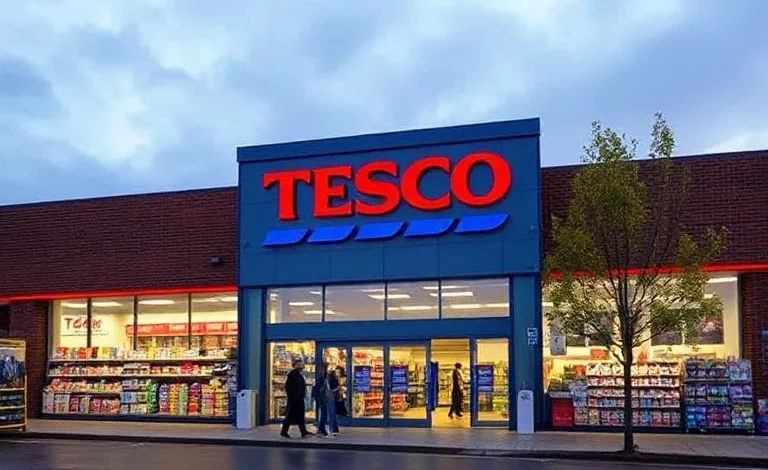
Internal and External Analysis of Tesco

This article provides a detailed internal and external analysis of Tesco, one of the UK’s leading retail giants. It explores Tesco’s internal strengths, such as its strong brand reputation, supply chain efficiency, and customer loyalty, along with weaknesses like pricing pressures and intense competition. Externally, the article examines key opportunities and threats using PESTLE and SWOT frameworks, covering economic trends, technological advancements, and evolving consumer behaviors. Overall, it highlights how Tesco strategically adapts to market challenges to maintain its leadership in the global retail sector.
Internal Organization Overview (Analysis of Tesco)
Historical Development
Jack Cohen established the now-global retail behemoth Tesco from a stand in a London market in 1919. Throughout its growth from a mom-and-pop grocery store to a global powerhouse, it was an early adopter of many retail technologies, such as self-service checkout lanes, customer loyalty programs like Club card, and expansion into related industries like banking, insurance, and telecommunications.
Barriers Encountered
Competitive pressures, economic downturns, and difficulty in foreign markets were among the obstacles that Tesco encountered during its expansion. Due to its highly complicated organizational structure and falling market share, the corporation had a rough go of it in the late 2010s.
Mission
Value for customers, sustainability, and community involvement are at the heart of Tesco’s goal, which it pursues through providing high-quality items, outstanding service, and convenient locations.
Ownership
The London Stock Exchange is home to Tesco’s operations as a public limited company (PLC). Shareholders own a portion of it.
Organizational Structure
Substantially, Tesco’s organizational structure has developed through the years. At first, it was structured hierarchically, but later on, it became more decentralized. For efficient management, it is comprised of functional departments including marketing, operations, and finance, as well as regional divisions.
Evaluate the present setup by looking at how well it responds to changes in the market and how efficient it is at making decisions. In order to react quicker to changes in the market and customer demand, the corporation may have shifted towards a flatter, more nimble structure.
Products and Services
Food, apparel, gadgets, and banking are just a few of the many categories covered by Tesco. Among its offerings are insurance, mobile networks (Tesco Mobile), online shopping, and banking (Tesco Bank).
Staff Functions
Several departments within Tesco rely on the hard work of their employees, including marketing, logistics, finance, information technology, human resources, and store operations. To keep everything running smoothly and keep customers happy, every department is vital.
Competitive Advantage
Tesco’s extensive retail network, well-oiled supply chain, wide selection of products, customer loyalty programs, and formidable brand recognition give it a leg up in the market.
Several quality awards have been bestowed to Tesco, which includes honours for its dedication to eco-friendly business methods, community service, and outstanding customer service.
PEST Analysis of Tesco
The four Ps of a company’s microenvironment Political, Economic, Social, and Technological—are investigated in a PEST study.
Political Factors
The business practises of analysis of Tesco are governed by a number of statutes and ordinances pertaining to taxation, commerce, employment, and food safety. Sourcing, labor expenses, and general company operations are all susceptible to policy shifts.
Due to its global position, Tesco is impacted by things like trade agreements, tariffs, and geopolitical tensions, which can impact its supply chains and market access.
Tesco places a premium on adhering to health and safety regulations, particularly those pertaining to the food business. The sourcing, distribution, and product offers can all be affected by changes in regulations.
Economics Factors
The market, economic cycles, inflation rates, and customer purchasing habits are some of the economic factors that impact Tesco’s profitability. Consumer spending power and inclination to purchase more expensive or luxury goods can be impacted by economic downturns.
Tesco’s profitability and the cost of imports are affected by changes in the value of different currencies because the company operates in more than one country.
Variations in regional income levels impact market segmentation and product pricing tactics employed by Tesco.
Social Factors
Lifestyle, food, and shopping tastes are always evolving, which has an effect on Tesco’s products and advertising campaigns. Their company choices are impacted by the growing desire for healthier options, ease of use, and environmental responsibility.
Trends in urbanization, changes in family patterns, and an ageing population all have an impact on the demographics of the areas that Tesco aims to serve and the goods and services that customer’s desire.
Environmental sustainability, fair trade, and ethical sourcing are becoming more important issues for consumers, and this has an impact on Tesco’s reputation and customer preferences.
Technical Factors
Online shopping platforms, data analytics, and supply chain automation are just a few examples of how Tesco has embraced technology to improve operational efficiency and the consumer experience.
Investments in online platforms and last-mile delivery solutions are becoming more necessary as a result of the fast improvements in e-commerce technology and mobile applications, which are reshaping Tesco’s retail tactics.
To remain competitive and improve customer happiness, Tesco embraces new technologies such as AI, the Internet of Things (IoT), and automation in inventory management and tailored marketing.
With this knowledge, Tesco is better able to foresee shifts in the market, adjust its strategy, and lessen the impact of risks brought on by the ever-changing macro environment.
Management Theory
The management techniques of Tesco (Analysis of tesco) have been both efficient and inefficient when it comes to adopting Henri Fayol’s Administrative Management principles:
Efficiencies
Planning
Tesco’s market entry methods and diversification into related industries (banking and insurance) attest to the company’s mastery of strategic planning. This is in keeping with Fayol’s planning principle, according to which an organization should establish objectives and make plans to reach them.
Organizing
Management of activities and divisions has been a strength of Tesco’s organizational structure, which has changed over the years but remains stable. A structured approach to operations is seen in the decentralization, functional departments, and regional divisions of the organization.
Coordination
Analysis of Tesco: Tesco’s huge network of stores and distribution hubs runs well because of the company’s ability to synchronize operations. Alignment with corporate goals and efficient operation are both guaranteed by coordinated efforts.
Conclusion:
In conclusion, internal and external analysis of Tesco reveals how its strategic strengths, such as brand value, operational efficiency, and customer-centric approach, have helped it remain a dominant force in the retail industry. However, challenges like fierce competition, changing market trends, and global economic shifts require continuous innovation and adaptability. By leveraging technology, expanding sustainable practices, and enhancing customer experiences, Tesco is well-positioned to sustain its growth and competitiveness. The company’s ability to balance internal capabilities with external opportunities will continue to define its long-term success.