
Global Strategy and Implementation of Unilever.

In this report, “Global Strategy and Implementation of Unilever,” we discuss Unilever is a multinational conglomerate, operating in the field of consumer goods trade. While it is now generating transactions worth more than $ 50 billion, it is also one of the giants in its industry across the world. Having operated in more than 190 countries, Unilever’s intricate and complex web of operations demonstrates its commitment to delivering products that are relevant in specific markets. The company prides itself on more than 150,000 employees who, in mutual focus on innovation, sustainability, and delivering high-quality goods to consumers around the world, act as the power of the company.
Read more: Global Strategy and Implementation of Nestlé.
Threat of New Entrants
Economies of Scale:
Incumbent participants enjoy the use of large economies of scale that are also known as the more we produce the cheaper it gets. Consequently, the scale economies are achieved through sharing of a fixed cost (such as production plants and equipment) over a higher output. The barrier to entry is the equalization of the costs of production; hence the new entrants have the challenge of achieving the same economies of scale as the incumbents, which makes it difficult for them to compete on price.
Brand Loyalty:
Established firms in the industry have succeeded in creating a loyal base of customers over the years. Customers may opt for these brands due to familiarity or perceived quality, or feel some emotional connection with them. Newcomers have to struggle with the task of converting consumers from familiar brands to their novel products, which is not an easy task. It is not easy for them to get a market share. Capital Requirements: The consumer goods industry most often requires that capital be invested in either operating or non-operating assets such as manufacturing facilities, distribution networks, marketing campaigns, and research and development. The high entrance capital requirements represent a great obstacle for the new players on the market.
Regulatory Barriers:
Regulation is stringent in the consumer goods sector, especially concerning product safety, labeling requirements and environmental standards. Adhering to these regulations entails substantial amount of time, assets, and knowledge. The first mover advantage is possible as new entrants may struggle with understanding and abiding by the regulations that are currently in place thus increasing the barriers to entry.
Access to Distribution Channels:
The incumbents in the industry have long-established distributional networks, where they have built relationships with retailers, wholesalers and logistics providers. These channels are of paramount importance for the customers to be reached by the company. Newcomers are often unable to duplicate or add to the same distribution channels, which limits their opportunities for competition in the market.
Bargaining Power of Supplier
Concentration of Suppliers:
In other instances, consumer products may be restricting the market since their number is small and the few of them are exploiting the majority of people in the market. This contraction will give them the ability to influence negotiating prices of manufacturers and suppliers and they will be easily able to adjust to any change in price and terms. Power of suppliers can be used for increasing their market strength, which includes price hike and other unfair terms and conditions to manufacturers.
Switching Costs:
Shifting the supply sources would be associated with high switching costs for the companies with the companies changing their suppliers for the rare raw materials or certain components in common. This expense is not limited only to the financials such as the search and the integration of a new supplier but also the time and effort of making sure that the newly supplier held the bill on their deliverables. A vulnerability in the value chain is raised by higher switching costs which higher the proportion of manufacturers who continue to use the same suppliers, thus increasing the negotiations power element of existing suppliers.
Forward Integration:
The transaction support may especially choose to become a competitor, taking the advantages of integrating the production of the final branded products. The effect of this threat is that the power of the suppliers will increase as manufacturers being not sure how to act and not wanting to risk losing the access to the crucial inputs, get into a defensive position. Suppliers may integrate operation levels right up to the manufacturers who may be hindered in their cost negotiations and price breakdown.
Unique Inputs:
Suppliers delivering unique or differentiated inputs usually have better bargaining power than commission agents whose bargaining power depends on their specialized and competitive products. Vendors relying on such distinctive inputs may have no other vendors alternatives hence the sellers have more power in price negotiations. This squeeze on margins intensifies as the power goes to the suppliers who can demand higher prices or impose stricter terms to the manufacturers.
Price Volatility:
Volatility of the prices which independent suppliers can require the industry to be unprofitable due to fluctuations of the prices. Instability in critical inputs’ prices involves some level of peace and order in the manufacturing sector’s production cost. The price volatility in the raw materials market can lead to deviations from the equilibrium point whereby suppliers can look to hike the prices if the demand or supply is shifted in the opposite direction thereby resulting in losses to manufacturers and increased costs.
Analysis
Analyze Unilever’s international strategy using both Porter’s Diamond and Bartlett & Ghoshal’s framework:
Porter’s Diamond
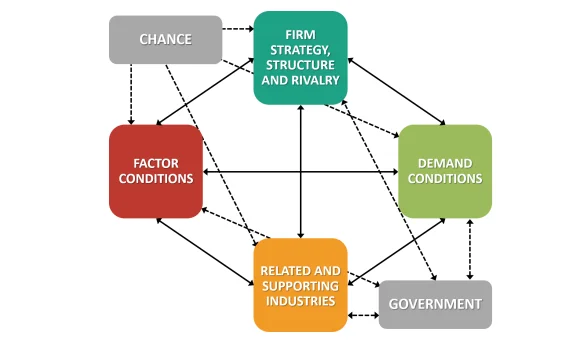
Factor Conditions:
The operational environment of Unilever in the Netherlands is greatly favored by the country’s strong economy and infrastructural setup as well as by a pro-business regulatory framework. The Netherlands is home to a world-class education system which graduates a highly skilled workforce across many disciplines. Unilever benefits from this wide pool of talent, which allows the company to hire world-class employees and to develop a culture of innovation and a competitive edge in the global market.
In addition, the Netherlands has advanced infrastructure, which is reflected by the modern transport networks and effective logistics systems. This sophisticated infrastructure makes possible easy transfer of raw materials to production sites as well as traveling of the finished goods to the markets across the country and even to the international markets. The logistic efficiency not only saves operational costs, but also improves the overall supply chain effectiveness of Unilever. Unilever’s productivity and innovation levels, essential for its success in the highly competitive consumer goods sector are substantially influenced by the synergy of a well-trained workforce and a top class infrastructure that is available for the company operations.
Demand Conditions:
Unilever takes cognizance of the strong worldwide fast-moving consumer goods (FMCG) and windows of opportunities which this created, to maintain its brand image and sustain profitability. Being a conglomerate internally driven company, the Unilever brand consists of multiple product lines, including personal care items, home care, and the beverage and food suppliers covering a wide range of consumers and their different tastes and needs worldwide. The focal point of their marketing strategies is based on the consumers deep understanding of their preferences and behavior. That is why the company employs thorough market research and analysis of consumer behavior. As a result, they can respond quickly to the emerging trends and adapt their marketing strategy appropriately. Smartly then, a part of Unilever’s success is through its extensive focus and investment on product innovative and brand era, making sure the products are still up to par with the ever-changing market trends. Unilever’s unrelenting effort to clinch a new brand by following evolving consumer concerns is the key of its fueling sales worldwide.
Related and Supporting Industries:
The Unilever supermarkets comprise companies which are in the peripheral and supporting industries like the raw materials suppliers, the manufacturers and distributors across the world. The company operates a strategic supply chain of raw material and packaging material suppliers to ensure the consistency and reliability in resource provision. Through close cooperation with these partners Unilever can achieve a number of benefits, such as sourcing quality inputs at cost-effective prices, optimizing production processes, and diversifying supply chain risks. Moreover, by being part of sustainability projects including its Sustainable Living Plan, Unilever can team up with the non-governmental organizations which are in the business of making sure that the supply chain is responsible and the environment is preserved and sustained. Unilever partners with NGOs, governments and businesses associations in programs which are meant to promote sustainable agriculture, end waste and mitigate climate change. Unilever practical demonstrates its social responsibility through the commitment to ethical business practices.
Firm Strategy, Structure, and Rivalry:
Unilever’s strategic plan is centered on brand differentiation, innovation and sustainability, which are backed by a distributed organizational structure. The company’s brand portfolio which is well recognized globally including Dove, Lipton and Magnum etc. indicates its competitiveness against other competitors and its strong position in the market. Unilever’s decentralized structure is based on the principle of local responsiveness and agility. As a result, subsidiaries are able to adjust their products and marketing strategies according to the individual needs and preferences of different geographic areas. This decentralized practice is further supported by the centralized functions in matters like research and development, marketing, as well as supply chain management to ensure uniformity and compliance with corporate plans. However, Unilever is one of the most solid and powerful players within the market that are confronted with fierce competition from global rivals like Procter & Gamble and Nestlé as well as regional players in different markets. Such a competitive landscape creates an environment that is driven by continuous improvement and innovation, in essence; it motivates Unilever to achieve excellence both in terms of product quality, customer satisfaction and efficiency so as to retain its leadership, which is essential for sustaining long term growth.
Chance:
Chance elements imply an external stress that may be either unexpected events or new opportunities that help a business grow. For Unilever, maybe factors like changes in consumer behavior, technical innovation, economic fluctuations, and international political issues can undermine stability. Utilizing the positive nature of the external environment will contribute to the company’s ability to keep on developing as well as acquiring additional markets. On the other hand, poor handling of undesirable external factors will definitely lead to the company having hardships in maintaining its competitive edge as well as sustaining its growth.
Government:
Government policies and fiscal regulations have tremendous implications on the consumer goods sector, touching on sphere of commerce, tax issues, sustainable environment, and labor practices. Through lobbying and dialogue with the governments and policymakers, Unilever can promote potential adoption of policies that will foster a sustainable business practices and innovation, within the economy. Apart from this, regulations compliance and keeping a track on government initiatives proves the company’s involvement in sustainable development and participation in good corporate citizenship.
International Strategy:
In the consumer goods industry, the international strategy was based on creating subsidiaries in different countries for local-level adjustments. This method utilized the global market size and yet catered for local needs. Through precise adaptation of product formulation, packaging and marketing strategies, the industry sought to establish a powerful global footprint. This approach needs a thorough market research, consumer behavior analysis, and local marketing partnership to target local distributors or retailers for local relevance and competitive advantage in various markets.
Global Strategy:
The consumer goods industry evolved as it expanded and adopted a worldwide approach with centralized decision-making and standardized operations. Such strategic shift was achieved to realize economies of scale, to guarantee effective resource allocation as well as to boost brand power on an international scale. By unifying the core operations associated with procurement, production and marketing, the industry targeted optimum efficiency and profit. The strategy comprised of implementing standard processes, technology platforms, and also performance metrics so to achieve uniformity and improve the efficiency of operations across territories.
Transnational Strategy:
Currently, the consumer goods industry is a transnational type that is a mix of global integration and local responsiveness to satisfy specific market requirements. This strategic approach recognizes the importance of a global presence while giving subsidiary firms the freedom to adapt products and marketing strategies to local needs. The industry promotes innovation and agility in response to changing market dynamics through knowledge sharing, cross-functional collaboration, and best practices transfer. Through this strategy, quick adjustment to local fashions, regulations and customer tastes is achieved which is an aid to flexibility and market relevance.
Multidomestic Strategy:
In different culturally sound sectors, the consumer goods industry which would use multi-domestic strategy might localize the products, marketing and operations. This tactic is necessary in the sense of alignment to market necessities, thus guaranteeing customers’ particular needs, and this helps in admitted advantage over local competitors. By modifying product line-up, pricing-out and channel-distribution in accordance with local customs and norms and legislative frameworks, the industry displays readiness and ability to respond to customer needs and market demands. Such process relies in the most part on adaptability, swift response to the changes circumstances introduce, together with the fluent comprehension of the internal workings of the market as a key to success.
Industry’s Internationalization Process:
The consumer goods industry over time have internationalized through their ability to access the amenity of skilled workers, latest technology and effective infrastructure throughout the globe. This process encompasses also expansion plans, with direct subsidiaries creation, signing of strategic alliances and local companies acquisition that will translate into market presence and utilization of local professionals expertise. Besides, this business steers towards the latest technologies like e-commerce and digital marketing to broaden its markets and more segments of consumers.
Factor Conditions:
Resource conditions such as qualitative workers, advanced technology, and logistics service are key factors driving the internationalization in consumer goods producing sectors. Access to such factors allow industry players engage in innovation, within the scene of manufacturing and distribute products rapidly and effectively across the globe. On the other hand, funding research and development, recruiting talents, and implementing latest systems and software allow us to stay ahead of the gaming market today that is very competitive with the diversity of culture and languages.
Operational Strategy:
Unilever’s operational strategy takes into consideration the three parameters namely efficiency, quality, and responsiveness. It follows that a strategic solution of strong marketing, solid brand recognition, and product diversification will be required by the firm to maintain the lead. By means of continuing development projects, chain optimization, as well as R&D, Unilever aims to become more successful in accordance with the requirements of the consumer, which become more sophisticated every day.
Environment Analysis
PESL
External environment has a number of concerns that may weaken the company’s position. Using the PESL framework (Political, Economic, Social, and Legal factors), let’s discuss the major issues:
Political Factors
Unilever is active in many countries and impediments to trade or imposing tariffs could interfere with its supply chain and impose additional cost. Political uncertainties, including trade disputes between the major economies could result in global trade becoming unstable, which in turn could affect Unilever’s international activities.
With consumers becoming more health-conscious, and the rules that govern the industry getting stricter, the policies that Unilever operate under include product safety, labeling, and advertising. New regulations, and especially concerning the standards of environment and safety, may require Unilever to reconstruct the operations and formulations for the products that would remain in line with the legislation, which, in turn, may increase the costs and the time to get the new products to market.
Economic Factors
Unstable economic situations, high inflation rates, and the volatility of currency values in the main markets can influence negatively Unilever’s earnings. Volatility in exchange rates can change the company’s revenues and costs, especially if a certain raw material is sourced from a different country. The economic crisis or recession is another key factor that will influence the sales volumes of Unilever because consumers may reduce their expenditure on non-essential goods.
Unilever has diversified supply chains in which the company sources an array of raw materials, including agricultural commodities such as palm oil, soy, and cocoa. As the commodity prices in the world market may change because of the weather conditions, geopolitical tensions, or supply chain disruptions, this results in increasing the production costs or the profitability of Unilever. Furthermore, the supplier of sustainable raw materials may be more expensive due to the installation of eco-friendly or certified raw materials.
Social Factors
In the context of a market where consumers have started switching to healthy, ethical and sustainable products, Unilever is bound to face both threats and potential opportunities. The firm must adjust its product range and marketing campaigns to stay current with the changing consumer models that embrace natural ingredients, plant-based substitutes or eco-friendly packaging. A lack of change in the way the consumer needs to be met could lead to the market share being taken away from the competitors.
The trend towards health consciousness among the consumers can very well be the factor that causes a shift in demand in certain product categories, like for example sugar-rich snacks and processed food. Unilever should innovate and develop new products with healthier ingredients or make modifications to existing ones to match shifting dietary preferences and nutritional labeling regulations and health claims.
Legal Factors
Unilever has to come up with solutions to the complicated legal environment which involves the product safety, advertising, and labelling in different jurisdictions. Regulatory amendments or legal challenges with the regard to environmental issues, product authenticity or labor policies might undermine the brand reputation and financial performance of Unilever.
Unilever is in the competition market and legal, regulatory, antitrust scrutiny of practices or mergers and acquisitions might potentially affect its growth strategies. It is very important that Unilever’s business operations comply with competition laws and regulations governing monopoly, pricing, and fair competition to sustain its competitive position and reputation.
CSR Practices
Unilever is deeply involved in CSR practices and coordinating with the Sustainable Development Goals (SDGs) of the UN the same. The company’s sustainable living plan lays out a bold set of goals to address both environmental and social challenges, with sustainability considerations being integrated into their business strategy as a whole. Unilever’s CSR activities cover multiple sectors such as promoting sustainable sourcing, cutting greenhouse gas emissions, enhancing water usage efficiency, and waste management at the same time. In addition, Unilever prioritize programmes that make women self-reliant, foster health and hygiene, and improve community wellbeing To the extent that Unilever is compatible with some of the UN SDGs, it contributes to zero hunger, good health, and well-being, clean water and sanitation, gender equality, and responsible consumption and production, among others. Sustainability, through the integration of it throughout the Unilever value chain, is used by the company to foster a positive impact on society as well as growth in business long-term. That is through Transparency, accountability, and the engagement of stakeholders, Unilever shows its willingness to go beyond the SDGs in building a more sustainable and prosperous world for everyone.
Recommendations
Develop CSR programs that speak to the cultural norms and preferences in the nations where Unilever is established. The strategy which shows cultural awareness of local customs and traditions leads to the increase of community engagement and support for environmental goals and development. Enhance your collaboration with local authorities, non-governmental organizations, and community-based organizations for co-development and realization of CSR projects that are aligned with the UN SDGs. Using local knowledge and connections as basis can better influence the impact and efficacy of interventions, and this will in turn help to build goodwill and trust among different stakeholders. Give clear communication and a detailed involvement with the stakeholders, who include the employees, customers, suppliers, and local community. Through listening to customers and stakeholder concerns, and engaging them in decision-making processes, Unilever can gain their support and build long-lasting relationships for their CSR activities. Sustain innovation and technology to achieve corporate social responsibility targets, increase productivity, and decrease environmental pollution. Investing in green technologies, like renewable energy and sustainable packaging, can place Unilever as number one among the companies that are environmentally friendly. At the same time, these investments influence the costs and provide the company with a competitive advantage over its competitors.