
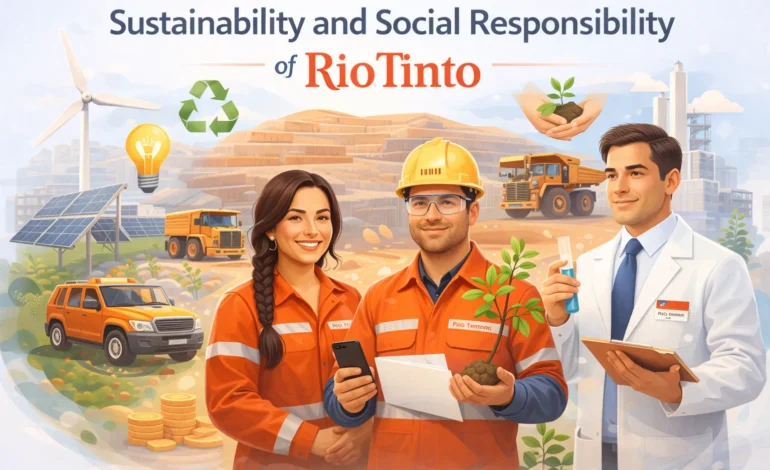
Sustainability and Social Responsibility of Rio Tinto

Core Characteristics of CSR in Rio Tinto
Rio Tinto is a world-renowned mining company that prioritizes Corporate Social Responsibility (CSR). It shows this dedication through several fundamental qualities:
Voluntary Initiatives
Rio Tinto’s voluntary initiatives go above and beyond what is required by law. In an effort to do its part for the environment and society, the corporation has taken the initiative to join several volunteer programs. Among these, there are community development projects that go above and above what is required by law, investments in renewable energy, and reductions in emissions of greenhouse gase.
Managing Externalities
Dealing with the social and environmental effects of Rio Tinto’s operations is an important part of the company’s corporate social responsibility (CSR). Programs to assist local populations impacted by mining operations, as well as efforts to restore degraded land and protect biodiversity, are all part of this effort to lessen the impact of mining on the environment and its inhabitants.
Building Relationships with Stakeholders
Rio Tinto understands the value of involving many different groups of people—employees, communities, governments and investors in order to achieve shared goals. In order to develop more ethical and sustainable business practices, it is essential to recognize and address the needs and concerns of individuals impacted by its activities.
Economic and Social Responsibilities
The company’s goal is to strike a balance between making a profit and contributing to society. Its attempts to safeguard fair labor practices, boost local employment, and contribute to community welfare through various social programs reflect this balance, as do its contributions to the economic development of the regions in which it operates.
Principles and Ethics
Rio Tinto regards CSR as an integral part of its company culture. The incorporation of sustainability and ethical implications into corporate decision-making, governance, and day-to-day business practices is clear evidence of this integration.
Going Beyond Philanthropy
Rio Tinto’s CSR strategy goes beyond the typical charity events. To ensure its own and the communities it serves long-term success, the firm prioritizes sustainable development practices. We must shift our focus from short-term philanthropy to long-term community programs that improve health, education, and self-sufficiency.
By adhering to these fundamental principles, Rio Tinto shows that it is serious about doing the right thing by society and the environment, and that it wants to make a difference that goes beyond just making money.
Theoretical Frameworks in CSR
Numerous Corporate Social Responsibility (CSR) theoretical frameworks offer a methodical way to comprehend and enhance Rio Tinto’s CSR programs:
Triple Bottom Line
Application in Rio Tinto
Social
Rio Tinto is very concerned about the welfare of the areas in which it does business. Efforts to engage the community and funding for local healthcare, schools, and infrastructure are clear indicators of this. To avoid negatively impacting the local way of life and to create job and training possibilities, for instance, they may work with local communities.
Environmental
The business is making strides to lessen the damage it does to the environment. As part of this commitment, they are working to restore former mining sites, reduce the amount of disturbed land, and use renewable energy to power their operations. Effective waste management and water usage monitoring could also be part of their initiatives.
Financial
Rio Tinto is committed to being financially healthy in addition to being socially and environmentally responsible. Making smart investments, running efficient operations, and satisfying shareholders financially are all part of this. Their sustainability efforts should also help the company’s finances in the long run, so they’re working on that.
Carroll’s Pyramid of CSR
Application in Rio Tinto
Economic Responsibilities
Maintaining a healthy bottom line is a top priority for Rio Tinto. In order to fund other CSR initiatives, they must keep their mining operations profitable.
Legal Obligations
It is essential to adhere to the rules and regulations of every country in which the business operates. Compliance with all applicable rules and regulations, including those pertaining to the environment and labor, is essential.
Ethical Responsibilities
Going above and above what is required by law, Rio Tinto strives to do business in an ethical manner. Fair work standards, respect for indigenous peoples’ rights, and honest reporting might all be part of this.
Philanthropic Responsibilities
Rio Tinto participates in charity by providing funding for educational programs, community projects, and relief operations following natural disasters. Their dedication to making a positive impact on society is evident in their accomplishments in this field.
The Five Capitals Model of Sustainability
Application in Rio Tinto
Human Capital
Here, we prioritize the well-being, security, and advancement of our employees. Among Rio Tinto’s potential investments are training programs, competitive benefits, and workplace safety measures.
Natural Capital
Sustainable utilization of natural resources with minimal environmental impact is the essence of natural capital. Water conservation, biodiversity preservation, and climate change mitigation are all methods that Rio Tinto may employ.
Social Capital
For social capital to flourish, it is essential to cultivate solid connections within communities and among stakeholders. Partnerships with local groups, community consultations, and funding for local development are all examples of what this might entail.
Manufactured Capital
Using machinery and other forms of technology in an economical and conscientious manner is an example of manufactured capital. It is safe to assume that Rio Tinto is always looking to improve its operating procedures and invests in state-of-the-art machinery.
Financial Capital
To enable sustainable growth, it is critical to ensure that financial resources are managed effectively. Financial risk management and careful investment planning are part of this.
Stakeholder Theory
Application in Rio Tinto
Employee Engagement
It’s safe to assume that Rio Tinto places a premium on employee engagement by providing a secure workplace, opportunity for advancement, and equitable treatment of employees.
Community Engagement
This entails talking to the people who live in the area, particularly those who will be most affected by the mining. Community development programs and resolving issues pertaining to mining could be part of the initiatives.
Regulatory and Governmental Organizations
In order to shape regulations that impact the industry and guarantee compliance, it is important to work closely with regulatory agencies and governments.
Shareholders and Investors
It is critical to keep shareholders and investors informed about financial performance and sustainability policies. Rio Tinto must show how its CSR plan contributes to the company’s bottom line in the long run.
Environmental Groups
Another facet is working with environmental groups to create and execute sustainable mining methods. Finding creative solutions to the environmental problems of mining can be aided by this.
To sum up, Rio Tinto’s CSR strategy is well-rounded and in line with many theoretical models. To provide a holistic and ethical mining strategy, each framework brings a different viewpoint and set of procedures to the table (Lian, Undermining conflict: Multinational miners, conflict and participation in Indonesia, 2020).
Strategic CSR Approaches in International Companies
Successful CSR Strategies in Global Mining Firms
Environmental Stewardship
Leading mining corporations typically prioritize water management, energy efficiency and land rehabilitation as ways to reduce their environmental effect. This is part of their environmental stewardship efforts. To demonstrate their dedication to environmental sustainability, for example, use state-of-the-art technology to manage emissions and decrease waste.
Community Development and Engagement
Well-known mining companies make substantial investments in the areas where they have operations. Infrastructure development, funding for community health and education initiatives, and job creation are all part of this. In order to identify and address community needs, businesses may form partnerships with regional groups.
Employee Welfare and Safety
A prevalent topic is the importance of prioritizing the safety and well-being of employees. Health efforts, training programs and stringent safety measures all contribute to this goal. Many businesses go above and above what is required by law to provide a safe and healthy workplace for their employees.
Sourcing and Supply Chain Ethics
We place a strong emphasis on ethical sourcing and responsible management of the supply chain. Efforts should be made towards more transparent and traceable supply chains and the sourcing of resources should not abuse labor or harm the environment.
Stakeholder Engagement
Successful mining companies understand the importance of collaborating with a wide variety of stakeholders, such as local populations, NGOs, and governments. Participation like this is useful for establishing policies, checking for compliance, and gaining buy-in from relevant parties.
Innovation and Sustainable Technologies
Investment in R&D for sustainable mining practices is another strategic option. Innovation and sustainable technologies are also important. Investigating alternative energy sources, creating greener mining practices, and funding green technology are all part of this effort.
Analysis of Rio Tinto’s Current Community Engagement Strategies
Consultation with Local Communities
Rio Tinto values community input highly. To achieve this goal, it may be necessary to implement feedback channels, conduct community surveys, and hold frequent meetings.
Economic Contributions
By hiring people, buying from other local companies, and paying taxes, the company probably helps out the local economy. In the areas where they operate, this economic impact can be substantial.
Education and Skill Development
Rio Tinto may put money into community programs that help people learn new skills and improve their existing ones. Supporting local schools and educational institutions, offering training programs and providing scholarships are all examples of what this can entail.
Programs for Health and Well-Being
Programs for health, especially in areas with limited access to medical treatment, are another facet. Supporting health education and illness prevention programs, as well as local health clinics, could be part of this.
Cultural and Heritage Protection
Rio Tinto has an obligation to preserve and honor local traditions and cultures since it is a mining business that operates in many different regions. This can involve lending a hand to community arts initiatives and taking steps to safeguard cultural landmarks.
Projects to Preserve the Environment
As part of its corporate social responsibility initiatives, Rio Tinto is probably contributing to local environmental preservation efforts. Efforts to save wildlife and plant trees are two examples.
International mining firms, like Rio Tinto, have taken strategic approaches to corporate social responsibility (CSR), which aims to balance economic goals with environmental care, community engagement and ethical practices. This all-encompassing strategy helps achieve sustainable development goals while also addressing the long-standing effects of mining.
Recommendations for a Sustainable CSR Strategy
Rio Tinto can think about these suggestions to improve its sustainability and Corporate Social Responsibility (CSR) programs:
Enhancing Ecological Responsibilities in Corporate Strategy
Sustainable extraction methods that minimize environmental impact should continue to be a priority for Rio Tinto. Renewable energy sources should be invested in for mining operations, and waste and energy consumption reduction technologies should be adopted. Create and execute thorough strategies for managing biodiversity, with a focus on places that are particularly vulnerable to environmental degradation.
Finding important places to restore and preserve requires teamwork between environmental specialists and local groups. Reiterate pledges to cut emissions of greenhouse gases. Some possible steps in this direction include shifting to low-carbon energy sources, investing in technology to trap carbon emissions, and establishing loftier goals. It is critical to deploy improved water conservation and recycling strategies due to the substantial water use in mining. In order to be a good water steward, Rio Tinto can figure out ways to use less freshwater.
Improving Social Welfare through Responsible Mining Practices
Cooperation with local communities should be prioritized. To achieve this goal, it may be necessary to implement more participatory decision-making procedures, increase funding for local healthcare, education, and infrastructure, and prevent mining from negatively impacting local livelihoods. Put your energy into making local communities more economically viable. The provision of vocational training, the encouragement of local enterprises and entrepreneurs, and the employment of local populations are all parts of this strategy.
Indigenous and local communities should have their cultural history and rights recognized and respected. This includes taking measures to guarantee that cultural sites and traditions are not negatively impacted by mining operations. Keep all lines of communication open and honest with all parties involved; update them frequently on the effects of mining, any efforts to lessen those effects, and any corporate social responsibility programs.
Fostering CSR in Workforce Recruitment and Retention
Establish hiring practices that value and encourage a diverse and inclusive workforce. Fair employment procedures and reaching out to marginalized groups are part of this. Invest in programs that help employees grow professionally by providing them with training and chances to succeed in their careers. Inspiring workers to take part in CSR projects is another way to make them feel valued and appreciated.
Keep worker safety as your first priority in all that you do. Not only must safety regulations be followed, but an environment that values and encourages safety must also be fostered. Create incentives for staff members that help achieve sustainability and CSR targets. This has the potential to inspire workers to become more invested in these projects.
These suggestions can help Rio Tinto become a more responsible mining industry leader by incorporating sustainability and social responsibility into the company’s overall strategy. In addition to helping communities and the environment, this strategy helps businesses succeed and endure in the long run.
Stakeholder Analysis and Theory Application
Identification and Analysis of Key Stakeholders
An important part of corporate social responsibility (CSR) strategy is doing a stakeholder analysis to determine who the different groups are that have an interest in, or stand to gain from, a company’s actions. Important parties involved with Rio Tinto include:
Employees
The company’s rules and procedures have an immediate effect on its most valuable resource: its employees. Their growth, protection, and happiness are paramount.
Local Communities
People who live in close proximity to Rio Tinto’s mining operations are considered part of the local community. Community development, job possibilities, and environmental effect are their main areas of interest.
Consumers
They care more and more about the long-term viability of the raw materials supplied by Rio Tinto, and they depend on the company for this.
Suppliers
Crucial to the supply chain, their actions have the potential to greatly affect Rio Tinto’s environmental objectives.
Investors and Shareholders
Financial success is important to shareholders and investors, but the social and environmental effect of a business is becoming more important to them as well.
Government and Regulatory Bodies
These groups are concerned with the social and environmental effects of Rio Tinto’s business activities and can function as both critics and allies in the company’s pursuit of sustainability.
Indigenous Communities
Mining corporations should pay special attention to indigenous communities because they are important stakeholders, knowledge keepers about the local environment and culture, and communities that are impacted by mining activity.
Applying Stakeholder Theory to Rio Tinto’s CSR Strategy
According to stakeholder theory, the key to a company’s success is its ability to manage its connections with important stakeholder groups. Using this theory at Rio Tinto entails:
Understanding Stakeholder Concerns and Needs
Engaging with stakeholders on a regular basis to gain insight into their viewpoints, worries, and expectations is essential to comprehending their concerns and meeting their needs. Methods such as stakeholder panels, community gatherings, and polls can help accomplish this.
Using Stakeholder Feedback to Inform Decisions
Taking stakeholder feedback into account when making CSR and operational choices. In this way, we can be sure that our plans are meeting the demands and expectations of all parties involved.
Balancing Conflicting Interests
To achieve corporate goals while acknowledging that not all stakeholders’ interests are congruent, it is necessary to strike a balance that takes into account diverse viewpoints.
Transparent Communication
Clear and open communication: updating stakeholders on CSR practices, difficulties, and accomplishments. Among these are updates, public disclosures, and sustainability reports.
Partnership for Sustainable Development
Environmental preservation efforts and community development programs are examples of sustainable development projects that might benefit from partnerships with other stakeholders, such as governments and non-governmental organizations.
Building Trust through Consistency and Reliability
One way to establish credibility and trust is to be reliable and consistent in your approach to stakeholder engagement and ethical business practices.
With the help of stakeholder theory, Rio Tinto can improve its CSR approach and meet the requirements of all its stakeholders. This will lead to greater community ties, more trust, and a more sustainable business model in the long run.
Examining International CSR Strategies
International mining firms have embraced numerous community responsibility strategies as part of their CSR operations. To identify and meet community needs, these solutions generally involve interaction and input with local communities. Many firms invest in local education, healthcare, and infrastructure programs to improve their communities’ socioeconomic well-being. Local hiring and skill development are equally important for economic empowerment and employment.
Reforestation, wildlife conservation, and sustainable resource management are also important. These tactics also emphasize protecting and maintaining cultural heritage, especially in indigenous communities. Moving beyond traditional mining operations to engage with communities more comprehensively and sustainably shows the sector’s growing awareness of its social and environmental responsibilities.
Formulating a CSR Strategy for Rio Tinto
Developing Policies for Workplace, Community, Environment and Economy
To create an all-encompassing CSR strategy, Rio Tinto must establish strong policies in a number of areas:
Workplace
We prioritize the establishment of a secure, welcoming, and enabling work atmosphere. To achieve this goal, Rio Tinto has implemented a number of measures, including as rigorous safety regulations, health and wellness programs for employees, and diversity and inclusion efforts. Incorporating training and development into policies is a great approach to help employees grow professionally and personally, which in turn encourages a growth mindset.
Community
The goal of Rio Tinto’s community-oriented strategies should be to foster solid, win-win partnerships with local communities. This includes making sure the company’s operations don’t hurt the locals and investing in their infrastructure and services. Important local economic development programs include those that help small firms and give preference to hiring from inside the area. The company’s operations can be more aligned with community interests if it respects cultural heritage and has open engagement with community people.
Environment
Rio Tinto, as a mining firm, places a premium on environmental policies. Sustainable mining techniques, less waste, better water management, and better control of emissions should all be part of these pledges. Restoring and protecting the environment should be major goals of this plan to lessen the impact of any negative impacts on the ecosystem. It is also crucial to set sustainability goals that are both explicit and measurable, and to report on these goals on a regular basis.
Economic
Policy should strike a balance between making a profit and engaging in actions that are both ethical and sustainable. This encompasses open and honest financial reporting, ethical labor practices all the way through the supply chain, and responsible sourcing. The economic strategies of Rio Tinto should mirror the company’s dedication to bolstering the economy of the areas where it does business, whether that’s through direct hiring or through assisting other local companies and organizations.
Integrating Sustainable Practices into All Business Areas
The strategic integration of sustainable practices into all business domains demands a holistic approach:
Operational Integration
Rio Tinto should integrate sustainable principles into all aspects of its operations. This involves using environmentally friendly and resource-efficient technology and processes. For instance, using renewable energy sources and conserving water and energy.
Decision-making and governance
Sustainability should guide all decisions. This includes including sustainability metrics in business performance assessments and incorporating them into firm governance. Sustainability goals must link with company goals and be accountable at all levels.
Stakeholder Engagement
Regular engagement with stakeholders, such as employees, communities, environmental groups, and shareholders, is crucial. This aligns the company’s sustainability activities with stakeholder expectations and builds confidence and credibility.
Reporting and Transparency
Transparency in reporting on sustainability activities is crucial for accountability. Rio Tinto should frequently publish thorough ESG reports on its successes and areas for development.
Rio Tinto can guarantee that its CSR plan is comprehensive, resilient, and deeply integrated in its business operations by adopting these policies and implementing sustainable practices across the board.
Enhancing Ecological Responsibilities and Social Welfare
Rio Tinto’s sustainable development goals emphasize environmental and social responsibility. Advances in eco-friendly mining technologies and practices can help the industry reduce environmental effect. This involves investing in renewable energy to power operations, improving resource extraction methods to minimize land and ecosystem impact, and creating comprehensive waste management and recycling programs. Carbon capture and storage technologies and water conservation methods like reclaimed water in mining are also important. Rio Tinto can improve social wellbeing in its operations alongside environmental responsibility.
This includes creating local jobs, ensuring fair labor, and investing in infrastructure, education, and healthcare. Building collaborations with local businesses to boost the local economy and communicating openly with community stakeholders to meet their needs create community ties. In mining sites, indigenous culture and practices must be preserved and respected. These policies allow Rio Tinto to show its commitment to lowering its environmental effect and improving the social welfare of the communities it impacts, creating a more sustainable and responsible mining sector.
Strategy Enhancement and Recommendations
Specific Recommendations for Improving Rio Tinto’s CSR Strategy
- Prioritize effective involvement with stakeholders, especially indigenous and local people, to address their needs and concerns. Community advisory committees, regular meetings and public reporting can accomplish this.
- Invest in innovative environmental technology to reduce environmental impacts. This includes advanced renewable energy, water recycling, waste reduction and more efficient and less invasive mining methods.
- Make sustainability reports more detailed and transparent. These should explain environmental, social, and governance (ESG) activities, progress measures and future targets for accountability and transparency.
- Deepen CSR values into company culture through thorough training programs. Employees should learn about sustainability, ethics, and community engagement.
- Improve long-term sustainability initiatives. This may include education, skills training and healthcare and infrastructure development suited to mining site populations.
- Increase workforce and leadership diversity. Inclusive recruiting and retention policies should include women, indigenous people and other marginalized groups.
Suggestions for Aligning CSR Strategy with Business Objectives
- Integrate CSR objectives into the overall strategy. CSR becomes a key part of business decision-making by linking sustainability and growth goals.
- Drive sustainable mining technology development through CSR efforts. This aids environmental aims and operational efficiency and cost savings.
- Stakeholder engagement can reveal fresh business opportunities. Understanding community and customer demands can help create CSR-aligned products and services.
- Utilize CSR as a tool for risk management. A proactive approach to environmental and social issues can help the organization avoid liabilities and preserve a good reputation.
- Set measurable CSR goals and KPIs connected with company objectives. Monitor and report on these KPIs to ensure CSR initiatives help the firm succeed.
Conclusion
In conclusion, Rio Tinto’s planned CSR strategy prioritizes environmental conservation, community participation, and responsible business practices. Implementing breakthrough environmental technologies, engaging in community development, guaranteeing workplace diversity and safety, and integrating CSR into the business fabric are crucial. This plan supports Rio Tinto’s commercial goals and the mining industry’s growing sustainability imperative. Sustainability in mining is crucial for environmental protection, social welfare and industrial longevity. Rio Tinto can set a sustainable mining standard by adhering to these principles.