
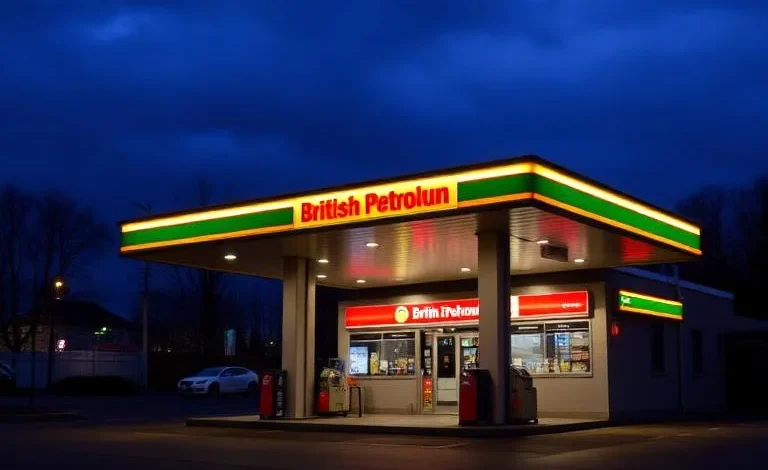
Principles of Management of British Petroleum

BP- British Petroleum is one of the largest energy firms in the world, with operations in over 70 countries. The main purpose of this assignment is to analyse BP’s recent situations and recommend the strategies that can raise the future success.
BP can respond to the global opportunities like the growth of Renewable Energy and the climate change regulations. British Petroleum is facing several issues, like how to balance the traditional oil and gas with the ambition of becoming a net-zero company by 2050.
Task 1: Explaining Management is Contributing to Adding Value at BP:
Management is the entire backbone of British Petroleum because the firm operates as one of the complex, competitive, and risky sectors across the world, especially in the energy sector. The energy industry is not only about oil and gas, but is also moving toward the sources of renewable energy sources.
British Petroleum is through careful planning, as it sets clear directions. Planning directly examines where the firm knows where it is going a how it will directly respond to the industrial challenges.
- Strategic Direction:
British Petroleum adds value to management through careful planning and the setting of clear strategic directions. Planning examines where the firm knows where it is going and how to rapid the challenges. British Petroleum’s industry and leaders have openly acknowledged that the oil and gas sector will continue to be important for the decision.
Customers, key governments, and the entire investors are demanding cleaner and more sustainable energy solutions. Bioenergy, Convenience Retail, EV Charging, and Hydrogen are the key models that become a clean alternative the fuel for the density and heavy transport.
British Petroleum ensures that staying relevant and competitive in the traditional fossil fuel markets helps to add value. BP, as a leader in sustainable energy for the future, and effective management planning is about protecting the current business while creating clear opportunities.
- Leadership and Cultural Change:
British Petroleum’s management also creates higher value by indicating the leadership during the times of key crises and major transitions. “Deepwater Horizon in 2010” is one of the worst oil spills in the brand’s history. British Petroleum’s leaders also placed a clear and new focus on transparency, safety, and the entire cultural changes.
Safety was not only treated as a compliance requirement but became the core value in how the firm operated. Bernard Looney is the Chief Executive Officer of the BP company, who is committed to prioritising the health, safety, and core environment. BP’s entire transformational kind of leaders create value for the ensuring of financial stability and rebuilding the brand reputation.
- Stakeholder Engagement:
BP’s management is also adding value through maintaining strong relationships with stakeholders like governments, employees, investors, and others. Stakeholder management and engagement are important for an energy firm like British Petroleum because its key activities affect the environment, local jobs, and the entire national economy.
Russia invaded Ukraine as a strong example, which can be seen in 2022. So, British Petroleum directly engages with the multiple stakeholders that are an important part of the business, leads the changes, and upgrades the specific values.
The Four Philosophies of CVF- Competing Values Framework at British Petroleum:
The Competing Values Framework explains organisational effectiveness by using the key philosophies. Clan, Market, Adhocracy, and the Hierarchy are the key elements that indicate the business resources.
- Clan Culture:
British Petroleum’s clan culture became important after the 2010 Disaster of Deepwater Horizon. The accident revealed the limitations in the safety practices as well as internal communications, which led to rebuilding trust and a stronger culture of openness and collaboration. British Petroleum has placed a major emphasis on employee engagement as well as safety.
The “Safety Leadership Program” encouraged the employees at each level, from the frontline workers to the entire senior management. BP’s clan culture approach has clear benefits. British Petroleum has a strong loyalty among the staff, like oil and gas. Clan culture not only strengthens the internal effectiveness but also reassures the investors and the core communities that the firm is committed to safer and the responsible practices.
- Adhocracy Culture:
British Petroleum’s adhocracy culture is especially related to the firm’s moves through the global energy transitions. BP’s shift from traditional oil and gas firms to low-carbon energy is a clear example of the adhocracy culture. British Petroleum has set a clear, ambitious goal of capturing a 10% share of the global hydrogen market by 2030.
Hydrogen is seen as the key fuel of the future, especially for sectors like aviation and shipping. British Petroleum is investing heavily in the offshore wind projects in the UK and the United States. Innovations are also visible in the upstream activities, where the firm uses Artificial Intelligence and core predictive analytics to optimise drilling and the equipment’s maintenance.
- Hierarchy Culture:
Hierarchy culture is based on the entire formal rules, standardized procedures, and efficiency. BP recognized the earlier decentralized model, where the local managers had higher autonomy and created variations in the safety practices and the operational standards. British Petroleum indicates that the equipment designs were simplified and standardized. British Petroleum can reduce the errors and improve the efficiency of efficiency.
British Pastorium also invested in advanced control systems like Real-Time Data Analytics and Automated Safety Controls for the core accidents. BP manages the lower production cost dramatically with the break-even prices as failing by less than 50 dollars per barrel.
- Market Culture:
Market culture directly focuses on the customer orientations, competitiveness, and the achievement of measurable results. British Petroleum’s recent strategies demonstrate a performance-driven culture. BP plc has made the bold decisions to cut costs through efficiency measures while at the same time investing the renewable energy sieves expand the convenience of retail businesses.
British Petroleum’s profit delivers the immediate financial results that satisfy the shareholders and positions the firm to stay competitive in future markets. British Petroleum encourages the reflection of four CVFs, like clan culture, adhocracy, and other roles.
Total Quality Management Theory at BP:
Total Quality Management theory highlights continuous improvements and customer satisfaction with quality assurance. After the incident of Deepwater Horizon, British Petroleum redesigned safety as the central quality issue. The rigorous safety audits, independent control, and employee training are part of continuous improvements.
Total Quality Management principles are directly visible in British Petroleum’s decisions to standardise the equipment as well a simplify the designs. British Petroleum applies Total Quality Management by investing in the digital monitoring system that detects the risks in the key pipelines and the entire rigs before they escalate. British Petroleum applies the total quality management to the area of monument businesses, like EV Charging Stations and retail outlets.
- Value Added at BP by TQM Theory:
British Petroleum can reduce the costs with efficiency as well as source improvements that cut the costs by 40% which protects the profitability. Total Quality Management emphasizes the safety and the continuous improvements that helped British Petroleum to rebuild its image after its past key failures. British Petroleum indicates reliable services in the renewables and retail sectors to rebuild the brand image.
British Petroleum’s reliable services in the renewables sector strengthen the long-term growth projects that enhance the core values, build the entire values, and upgrade the specific changes in the future. British Petroleum can balance the oil and gas with the renewable energy by applying the total quality management theory.
Task 2:
British Petroleum is one of the world’s largest multinational energy companies that operates across oil, natural gas, and renewable energy. British Petroleum’s headquarters has a tradition of generating success and exposure to the global and national strategies.
Management at British Petroleum is not only involved in the planning of operations and controlling costs. Management plays a vital role across every stage of the firm.
Long-PEST Framework:
PEST Framework consists of the political, economic, social, and technical activities that examine the business roles, justify the change, and upgrade the specific roles.
- Political Factors:
British Petroleum is the largest oil and gas firm in the world, and its key operations are strongly shaped by the political forces across the key regions where it operates. Governments and international organisations constantly introduce polices, rules, and restrictions that directly impact the business model. Political decisions about Climate Change, sustainability, and energy policy play a bigger role in determining the BP as growth or faces barriers.
The Paris Climate Accord of 2015 is one of the major examples that brought together countries across the world. British Petroleum’s management announced in 2020 a major transformation plan to become a net-zero firm by 2050.
British Petronius’s management created the long-term violate by securing the licensee to operate, improve the image as the responsible firm, and prepare the business for the entire future growth with renewable energy markets. The Russia-Ukraine War in 2022 is a good example that arises from geopolitical risks. British Petroleum held a 19.75% ownership’s stake in Rosneft.
- Economic Factors:
The global economy has a direct or significant influence on BP’s financial performance because the firm depends on the demand and the key prices of oil and gas. BPS revenue is largely shaped by the global supply and demand conditions that are influenced by the economic influence of trade and consumer demands. Moreover, the Russia-Ukraine war began in 2022 as oil and gas prices increased dramatically due to the fear of shortages.
BP’s management has focused on cost efficiency and financial resilience. Since 2013, the management reforms have reduced costs by above 40$. BP’s management is directly diversifying the revenue sources, so the firm is not overly dependent on the gas and oil markets. BP’s management has invested billions of dollars into renewable energy projects like offshore wind farms, solar power, and EV charging stations. BP aims to operate almost 100,000 Electric Vehicle charging points by the year 2030, which will create steady income streams from the higher green energy markets.
- Social Factors:
Social expectations are becoming one of the important influences on the British Petroleum operations. People are raising concerns about climate change, environmental sustainability, and the role of energy firms as play in the global emissions. Customers, Governments, And Employees now expect firms such as BP to take responsibility for the management of environmental and social changes. BP came after the “Deepwater Horizon Disaster” in year2010, which was the largest oil spill in the United States.
An accident killed 11 workers and caused severe environmental damage in the Gulf of Mexico. BP’s management continues to embed the corporate social reasonable at the heart of its key strategy. BP not only focuses on the marketing profits but also expands the community development projects with the education programs.
- Technological Factors:
Technology is another element and driver of the change in BP’s business environment. The global energy sector is undergoing rapid technical transformations, and the core companies that fail to adapt risk failing. British Petroleum Technology refers to the key opportunities to raise the efficiency and the sustainability across opening the new markets in the entire new renewable energy markets. British Petroleum uses advanced tools like artificial intelligence, robotics, and predictive analytics to make its operations safer and more efficient.
BP can control the drilling in real time and analyze the large amount of data to predict when the equipment might fail. Robotics is also raising safety in dangerous situations. British Petroleum has deployed the Robotics System for the inspection of pipelines and the operations of underwater.
BP’s management is also investing in renewable energy technologies as it recognises that the future of energy will be low-carbon. Moreover, hydrogen energy is another area where the technology plays a vital role. BP makes a plan to capture 10% of the global hydrogen market by the year 2030 with the use of advanced technologies to produce the entire sources and achieve success.
National and Local Environment:
BP gets the benefits from the government at the national level in terms of support for the renewable energy cut faces the strict regulations on carbon emissions. The UK’s government is directly committed to achieving net zero by 2050, which aligns with its own strategy of British Petroleum. BP also contributes to the UK economy through jobs, taxes, and investments. BP paid billions in windfall taxes in 2022, but management absorbed the costs to invest in projects.
Local movements often impose regulations regarding environmental protection. BP’s management adds value by working closely with the local regulators and demonstrating compliance. Locally, British Petroleum creates jobs and supports small businesses. BP’s environmental impact addressed by the local communicates. Management builds higher trust through the safety programs, community dialogue, and the CSR projects.
Global Opportunity and Threat:
- Opportunity: Growth in Renewable Energy:
One of the major global opportunities for British Petroleum exists in the rapidly growing renewable energy sector. The world is moving away from gas, fuels, and toward the cleaner sources of energy like wind and hydrogen. According to the IEA- International Energy Agency the renewable energy is expected to account the 90% of new global power capacity by 2030. BP delivers sustainable fuels for the acquisition and heavy transport.
BP firm is expanding the customer-focused services at the petrol stations, and BP Plc is building the charging networks. BP has already initiated the seizing of these opportunities. For Instance, BP firm has invested in its offshore wind projects in the United States as well as the United Kingdom. BP operates through the Light Sources BP, which has become the largest solar developer and manages the key projects in more than 18 countries.
- Threat: Climate Change Regulations:
BP also faces the major threat from the change of climate regulators and activist pressures. Regulators and governments are demanding that oil and gas firms significantly cut their carbon emissions. New Climate Regulations are being introduced worldwide, and many countries are imposing carbon taxes, strict emission standards, and key restrictions on drilling and key exploration.
For Instance, the European Union’s Green Deal aims to achieve net-zero emissions by 2050. BP’s management has taken some important steps to address the entire threat proactively. BP has pledged to become a net-zero firm by 2050, which will cut its oil and gas production by 40% in 2030. BP turns the challenges into opportunities by innovating faster in the renewable energy and unified the firm to become more transparent and accountable.
Task 3:
British Petroleum is one of the world’s largest energy firms as operating in 61 countries and employing 100,500 people globally. Moreover, BP is recognised as the leader in oil and gas, which has transformed its strategy in recent years to analyse the changes in the global environment.
Planning, organising, Leading, and controlling are the key functions of management that offer useful frameworks for analyzing how BP directly responds to these pressures. BP firm faces the critical role of investing the fossil fuels and renewables with the organization of allocating the resources.
Internal Challenge Identifications at British Petroleum (Managing the Energy Transitions While Maintaining the Profitability):
The global energy sector is changing rapidly even before. Governments, Investors, and Key Consumers are asking the firms to move away from fossil fuels and invest in the energy of renewable and clean energy. Oil and gas markets remain unpredictable and are entrusted the geopolitical tensions, wars, and sudden changes.
BP plc, which has been built over the years as a major oil and gas firm, to create a serious internal challenge. BP was almost entirely focused on the oil and gas sector. The firm explored, refined, and produced as generated strong cash flows and positioning BP as one of the largest energy firms.
Moreover, things have changed dramatically, and governments across the globe are introducing strict climate change policies. British Petroleum took the bold step by announcing its ambitions to become a Net-Zero Company by 2050.
BP has promised to eliminate the greenhouse gas emissions linked to its operations and the products it sells. BP creates the willingness to adapt to the change of work, but also creates a complex challenge within the firm. The balancing act between fossil fuels and clean energy is where BP’s management faces a major internal challenge.
VRIO Analysis:
VRIO Model is a strategic tool that helps to analyze the firm’s internal resources and core capabilities.
- Valuable:
BP’s investment in advanced digital technologies is a valuable resource. For Instance, BP uses the Instance, Robotics, and Key Predictive Analytics to control the drilling rigs and key pipelines. All of these technologies help prevent accidents, improve safety, and reduce the risk of pipeline accidents. British Petroleum is using artificial intelligence to manage the renewable energy projects, like forecasting the solar and wind outputs.
BP’s renewable energy portfolio is another valuable project that helps to develop large-scale solar projects. Renewable energy assets are important because they diversify British Petroleum to reduce its exposure and volatile oil prices and improve its reputation with society and the governments.
- Rare:
British Petroleum has the rare capability with the global brand recognition and presence across more than 70 countries. BP’s global brand reorganization and its clear presence across the70 countries in which it operates in the oil and gas sectors. Global footprint allows BP to spread the risks, capture the opportunities, and influence government policies.
BP also benefits from the rare ability to integrate the various parts of the energy value chain. BP can combine its current expertise in logistics, trading, and large-scale project management with the new clean energy investments.
- Inimitable:
Resources that are inimitable if the competition can’t copy or replicate them. British Petroleum has several strengths that relate to its experience in managing large-scale, complex infrastructure projects and the unique expertise in building oil rigs. British Petroleum also holds the patents, proprietary technologies, and trade secrets. Regarding both fossil fuels and the projects of renewable energy. British Petroleum’s corporate culture and the entire value of safety records after the Deepwater Horizon Disaster are inimitable. BP moves to the governments and stakeholders that operate globally to establish and maintain trustworthy relationships.
- Organized:
British Petroleum reorganized the business structure into three main goals. The productions and Operations, gas and low carbon energy, and customers with the core products. This reorganization is significant because it allows British Petroleum to balance the fossil fuel operators with its clean energy ambitions.
BP can create a separate group dedicated to low-carbon energy. BP has shown a seriousness about renewable energy and treating them as a side business; British Petroleum has a strong governance system also helps to stay organized. British Petroleum pushes the annual sustainability reports and tracks the progress of engaging with the stakeholder regulations.
Management Functions for the British Petroleum Challenge:
Here are some core functions of the management that enhance the business performance and team management.
- Planning:
Planning involves setting the objectives and allocating the resources to fulfill the common goals. British Petroleum’s overall planning is evident in the “Reimagining Energy,” as launched in 2020. British Petroleum company set out the clear goals to achieve net-zero emissions by 2050, reduce the oil and gas production by 4% by 2030, and invest5 billion per year in renewables.
BP also applied the risk management planning in hazardous industries like oil and gas accidents that have catastrophic consequences. British Petroleum sets SMART Goals like EV charging expansion, which target structured planning to ensure accountability.
- Organizing:
British Petroleum announced the major reorganizations to support the transition strategy. British Petroleum operates under the business segments like production and operators, gas and low carbon energy, and customers and products.
BP’s reorganization ensures that all the resources are directly allocated to raise areas like renewable energy and creates accountability because each division has a clear role and responsibility. BP’s management also organizes the cross-functional teams that help to work with the engineers in offshore wind projects.
- Leading:
British Petroleum’s Chief Executive Officer, Bernard Looney, is known for his transformational leadership style. Looney set a clear vision of British Petroleum becoming an integrated energy firm and achieving net-zero by 2050. British Petroleum invests in employee training, innovation hubs, and internal coordination to motivate the staff.
British Petroleum’s management promotes CSR activities, renewable inverters, and community projects to rebuild a higher level of trust. BP’s leaders add value by inspiring the employees to embrace the change, build trust, and ensure the firm adapts to global pressures.
- Controlling:
Controlling involves the performance, ensuring the components, and taking corrective actions when necessary. British Petroleum uses the KPIs- Key Performance Indicators to measure progress. BP company determines the reductions of carbon emissions, safety incident rates, and return on the investments for the renewable projects. BP also applied benchmarking, comparing its performance against rivals like Shell, Total, and ExxonMobil.
BP uses advanced technologies like Artificial Intelligence and Predictive Analytics to control the drilling rights and prevent accidents. BP’s controlling functions ensure compliance and accountability, which are important to ensure the higher-risk sector.
British Petroleum’s management approach has both strengths and key weaknesses. British Petroleum has clear long-term planning with advanced, measurable, sustainable targets. BP PLC has strong reorganizations that support the energy transitions. BP’s transformational leadership inspires the cultural change, effective control system, and use of advanced technology and safety protocols.
Task 4:
Personal SWOT:
| My Strengths | My Weaknesses | Opportunities (What Can I Improve?) | Risks (What Stands in the Way of My Improvements) |
| Strong communication skills as I explain mt ideas clearly in both writing and speaking skills, which helps me in teamwork presentations and building strong connections. | Delaying the tasks until the last minute creates stress and sometimes reduces the quality of my work | Time management training by initiating the plan of learning, setting personal deadlines, and using calendars or reminders. I can overcome procrastination skills | I faced the risk of social media, usage of phone, and old habits may stop me from managing time management in effectively manners |
| Adaptability is the quickly adjust when things change and pressure looks for alternative solutions | I spend too much time trying to make things flawless, which slows me down and makes clearing roles | I am focusing on what reality matters and accepting the good enjoys which can become more efficient | If I face failure, then I may struggle to let go of the key to perfectionism and keep moving forward |
| Listens to others and respects different opinions with the joy of working towards the group goals | I spend too much time analyzing the situations, which delays the actions | Making the small daily decisions can build my confidence and decrease the overthinking | If I keep doubting myself, and may avoid the decisions and stay stuck in overthinking. |
My main strengths are adaptability, teamwork, and communication, which help me to achieve success in both academic a personal life. I face the weakness regarding procrastination that slows my progress, and I feel nervous during public speaking, which impacts my learning and the working skills of the entire leadership team, or the larger organizational reputation.
Each weakness creates an opportunity for growth that improves time management and the use of the schedules with the cleared deadlines. I can practice decision-making in small steps and develop the patients as it helps to stay consistent and build the overall efficiency regarding the instant values.
Skill Development Plan:
Table 2 Skill Development Plan
| My Career Aims and Objectives (By Using Personal SWOT) | Identification of the Required Skills and Competencies | What Support and Resources do I Need | How Will this be Achieved and How Will I Measure Success? | When Will This Be Achieved? Target Date for Review |
| To become a confident and effective communicator with the leader. My strength is the strong collaboration with my weakness, sis, about public speaking anxiety. I want to use my core strengths and overcome all entire weaknesses | Public speaking, presentationism, confidence building, leadership, and effective resources | Support forms the mentors, presentation skills, practice, and group feedback from the openers | Joining the public speaking club and taking part in the class or group presentations, as I record myself to track my progress. | 6 to 12 months review progress |
| To manage the time better and stop procrastination, which will help me achieve my career goals without stress | Time management and self-discipline with the organization-based learning | Tools like planners, calendars, and productivity apps form the career advisors | Break the tasks into smaller steps and use the reminders to complete the work ahead of deadlines regularly | 3 to 6 months review after the academic terms |
| To control perfectionism and learns to prioritize the tasks as we want to balance the quality with the efficiency | Skills like goal setting and reality thinking | Advice from the teachers and the productivity tools, if possible | Uses the priority matrices and is good enough for the small tasks, as measured by when they finish the tasks | 6 to 9 months for review at the end of the academic year. |
Since I already have strong coordination skills, and want to strengthen them by focusing on public speaking as well as leadership. Procrastination is a major weakness and requires skills like organization, planning, and discipline. I often overthink, which delays the decisions and requires skills like critical thinking and confidence building. I often overthink and delay with my core decisions. The required skills are critical thinking and confidence-building with guidance and practice.
I can start making the small daily decisions and build up to the entire roles. I sometimes expect quick results and need to build patience, stress control, and resilience. I must build assertiveness and the skill of boundary-setting. Success will be effective and determine the roles that allow us to rebuild the cleared strategies. I want to prepare for a career in the energy or business field by raising my analytical skills, adaptably, and industrial knowledge.
Reflective Statement by Kolb’s Reflective Model:
Learning is most powerful when the gaining of knowledge and reflecting make sense. Kolb’s reflective cycle is a useful model for the process that explains how people learn through experience in different forms.
- Concrete Experience:
Kolb’s first stage is about the experience itself. The first task gave me the chance to link the academic theories to the real-world examples. I examined the investments in renewable energy by exploring the methods used by larger firms. I explored that a large firm has an internal channel to manage the energy transitions.
I used the VRIO Model that examines the effective resources like partnerships, infrastructure, and organisational structure. I created a personal SWOT model, which helped me to identify my strengths and explore the opportunities.
- Reflective Observations:
I saw the management theories as abstract, but after some time, I realized that they are not only for exams but also indicate real-world strategies. I explored that large firms such as BP use a hierarchy culture to raise safety and push renewable innovations made understand the organization’s mix in various approaches. I saw how deeply external factors shape the firm’s future by using the PEST Analysis. SWOT analyses were the first time as looked at myself the way to examine the organizational environment. I struggled with making my writing both detailed and simple.
- Abstract:
I learned that management theories are not old academic ideas, as they guide real decisions. British Petroleum’s adoptions of Total Quality Management indicate the safety measures and made the release of the adaptability to examine the organization-based activities. I will improve my learning and knowledge skills by directly participating in the business’s successful projects. Similarly, in my personal development, I must balance the immediate academic success with the long-term career growth. I also raised that my strengths, like critical thinking and core persistence, can be more powerful if used in the proper ways.
- Active Experimentations:
I will work on the skill of time management by breaking the big tasks into smaller steps with key deadlines. I will use my research and key analytical skills by applying them in the studies and making some real-life decisions. I will continue to reflect on my work progress with the use of the SWOT model, which helps me to track the growth and adjust the key strategies. I aim to work in management and business-related roles that require adapting to external pressure and balancing the different cultures, like engaging the stakeholders.
Conclusion:
British Petroleum is a strong and globally recognized energy firm, but it faces the main challenge as the world moves toward cleaner and the sustainable energy. Moreover, British Petroleum must continue to adapt to the quick changes and remain competitive in the energy transitions. BP should expand the strength of investments in renewable energy, like solar, wind, and hydrogen projects.
BP must improve the organizational culture and the leadership to ensure that the employees and stakeholders as aligned with the strategy. BP should expand the digital technologies and customer-focused strategies, like elector vehicle charging networks and digital platforms.