Biogas Innovate – Turning the waste into clean energy in Kenya

Business Plan: “Biogas Innovate- Turning the Waste into Clean Energy in Kenya”:
Proposed Future Business:
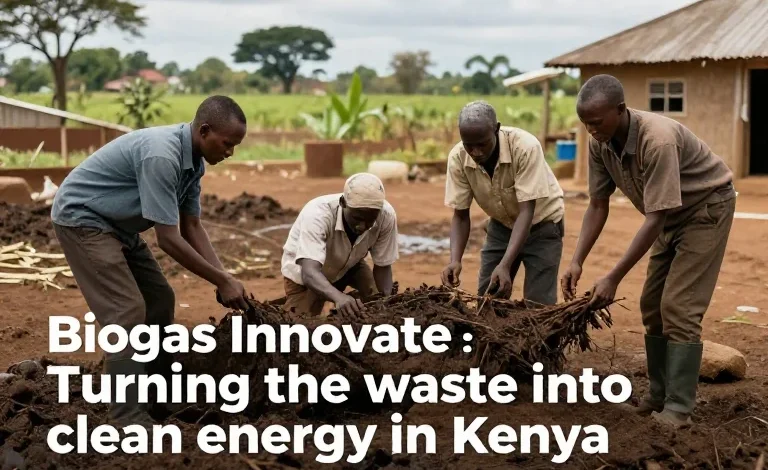
Biogas Innovate is a renewable energy business that focuses on the conversion of organic waste into clean as well as affordable energy through the use of the entire modular biogas digesters. The digesters come in multiple ranges and sizes, from 500 liters to 5000 liters, and these can be installed in homes and small businesses. Biogas Innovate is a unique business that has effective circular economic models. The business turns the waste into useful sources like fertilizer and energy.
The digesters are very portable and modular, which can be moved and scaled to meet the user’s needs. Moreover, we will use a mobile payment system such as M-Pesa, which allows users to pay little by little in a way that’s affordable for low-income households.
Biogas Innovate also plans to use labor as well as recycled plastic materials for the key digesters, which not only decreases the environmental impact but also supports the local economies. The model offers clean energy solutions and helps manage climate change to raise the quality of life in Kenyan communities.
Read more: Advanced Project Management of Kenya’s Urban Transport
Intellectual Property Rights or Protections:
Biogas Innovate is a business that can be protected by applying various intellectual property rights. First of all, we make a plan to Register the Unique Design of the business as modular biogas digesters. This term will prevent others from copying the specific technology and the structure of the system.
Secondly, we will register the Biogas Innovate business with the Brand Name, Product Names, and Logo as key trademarks. Biogas Innovate has a mobile payment system and customer interface, which will protect the software through the e-tire copyright. All of these steps help us to protect the business innovation and maintain a strong competitive edge in the market.
Organization Types and Legal Structure:
Biogas Innovate will be directly registered as a form of PLC- Private Limited Company in Kenya. This organizational structure allows businesses to prepare professionally and attract several investors through the management of financial risks.
- The company will be managed by a CEO who will oversee the firm’s direction.
- The Operations Manager of the company helps to manage the day-to-day activities and analyze the smooth production with the divert of the different roles.
- Biogas Innovate has a Marketing Team that helps to promote the business and search for new customers.
- The Finance Team will manage the budgeting, internal operations, and key salaries of the employees.
Customers:
The target customers of our business “Biogas Innovate” refer to the rural households, peri-urban communities, and the small-scale farmers. These customers still rely on charcoal for cooking, which is expensive and harmful to their health. So, we will work with both individual customers as well as farmers and NGOs.
- B2C: Individual Customers
- B2B: NGOs and farmer cooperation.
Biogas Innovate offers a unique value to customers with affordable as well as accessible packages that can cater to both B2B and B2C customers as key target audiences.
Competitors:
The main competitor of Biogas Innovate is Sistema. The bio and solar firms like M-Kopa and traditional fuel providers such as Sistema are the main competitors of the Biogas Innovate in the market of Kenya. Traditional fuels are cheap but harmful to the environment, which is why our business offers unique competitive sources that help to reach a large number of customers.
Table 1 Porter’s Five Forces
| Porter’s Five Forces | Implications of Biogas Innovation |
| Competitive Rivalry | Medium- There are a lot of biogas firms like Sistema and M-Kopa that affect the Biogas Innovation. Most renewable energy firms focus on solar, and the competition is not too high. |
| Threat of New Entrants | Medium- Initiating a biogas firm required higher technical knowledge and capital. This keeps various new firms away, but some NGOs could enter if the market becomes more profitable. |
| Bargaining Power of Suppliers | Low- Biogas Innovate has the main input as the organic waste that uses recycled materials and does not depend on expensive suppliers. |
| Bargaining Power of Buyers | High- Customers in rural Kenya have a lower level of income. They are very price-insensitive and only buy the affordable goods. |
| Threat of Substitutes | High- Many customers still use firewood and solar energy. These are cheap, so we must show them that biogas is better and safer. |
Skills Analysis:
We develop the SWOT analysis to represent our strengths, weaknesses, opportunities, and key threats that indicate the skills that are currently updated and need to be built in the future.
Table 2 SWOT Analysis
| Strengths: Strong technical knowledgeExisting partnerships with the farmers and the waste suppliers | Weaknesses: Lack of large-scale production experienceNeed better skills in marketing and educating the key customers |
| Opportunities: Kenya generates a lot of organic wasteThere is a growing demand for alternatives to firewood and charcoal | Threats: Low awareness of the general publicFlexible models of payment |
Projected Financials:
Here is a two-year projected financial forecast for the Biogas Innovate business as a small initiative in Kenya as an alternative to firewood and coal.
Table 3 Two-Year Projected Financial
| Heads | Year One | Year Two |
| Units Sold | 10,000 | 25,000 |
| Revenue | 5 million Dollars | 12.5 million Dollars |
| Cost of Goods Sold | 3 million Dollars | 7.5 million Dollars |
| Operating Expenses | 1.5 million Dollars | 3 million Dollars |
| Profit | 500,000 Dollars | 2 million Dollars |
So, year two is more profitable compared the year one due to the higher level of experience and the greater awareness of the business among the general public. The company’s core activities need to be recycled and generate specific roles that allow it to meet the sustainable and valuable practices.
Funding Sources:
Multiple sources are used by the business to improve funding and generate proper activities. Equity and Grants are remaining funding sources that provide detailed evidence of the success and generate a higher level of profitability for Biogas Innovate in the future.
Angel Investors and impact investors are the main equity-based sources that generate a higher level of commitments, maintain possible strategies, and build reliable values to pursue higher changes.
AFDB- Africa Development Bank, as a Clean Energy Fund, Global Innovation Fund, and KCIC- Kenya Climate Innovation Center are the main sources that provide grants for the Biogas Innovate. These sources align with the goal of sustainability and rural development. Grants reduce the risks and raise the overall affordability for the low-income users.
Resources Acquired:
Two types of resources are used to investigate the business activities and train the operators in Kenya. Tangible Resources and intangible resources are two types of resources that help Biogas Innovate determine the best facilities and generate either most effective resources. Tangible resources are the recycled plastic for the dining building, tools for installation, and a vehicle for the outreach.
On the other hand, the Intangible Resources are the technical know-how, the branding and digital presence, and the customer trust, with core partnerships existing. All of these sources are managed to generate better activities that lead the success, and aim to expand the business analytics.
The start-up cost rewired both the tangible and the intangible resources to determine the strengths. Biogas Innovate wants to expand its presence across the world by using the entire practice and harnessing its full potential. The tangible and intangible resources motivate the business to create clear and systemic changes that allow it to meet its goals.
Organizations and Management Information Systems:
Biogas Innovate will be directly based in Nairobi, with its regional officers in Eldoret and Kisumu, as well as Mombasa, to reach the customers. Biogas Innovate will target 14 both urban as well as rural customers through creating offices in both types of areas.
Each office will be liable for raising sales and installations and offering advanced customer services in its region. The firm will be managed through the team structure with clear roles and regular performance-based reviews.
We will use the Management Information System to analyze the change, address the internal environment, and create a collaborative culture that builds higher roles and activities. We will use the GIS tools to map the waste sources and delivery routes. The financial software will help us manage the budgets and key payments.
Biogas Innovate initiates the digital payment system for the convenience of customers and raises their level of motivation in the entire competitive market. This digital payment and interaction system will help Biogas Innovate to generate organized as well as efficient activities. The resources and organized management companies are reutilizing the best tools to create specific interactions in the future.
Vision for the Future:
Biogas Innovate has a long-term vision to create 5,00,000 homes around Kenya with clean and affordable biogas by 2035. The business aims to install at least 100,000 digesters by the year 2030 and reduce carbon emissions by more than 1 million tons each year. The business makes a plan to create 20,000 jobs in areas such as manufacturing and waste collection with community training.
The business can expand across East Africa, helping more communities benefit from clean energy. The business supports the various United Nations Sustainable Development Goals, like SDGs 7 and SDG 13, by turning waste into key wealth and building a healthier future for all.