
The Solar Powered Smart Charging Business Plan

Business Plan: The Solar Powered SMART Charging Stations in Australia:
The Proposed Future Business:
In this report “The Solar Powered Smart Charging Business Plan” we discuss, The business is about the network of solar powered smart charging stations for the EVs- Electric Vehicles, which aims to transform the charging landscape in Australia.
The EV market in Australia is poor because it has no effective e-charging point ratios compared to other areas, and there is a significant gap in the infrastructure that is important for EV adoption. The business directly analyzes the shortfall by Deploying Eco-Friendly and off-grid stations powered exclusively by solar energy.
The stations will be designed with key smart functionalities like AI-based energy demand that stores the battery for post-sunset use, with core mobile connectivity. The combination of sustainable technology and digital conveniences makes the business effective and innovative, with social impacts.
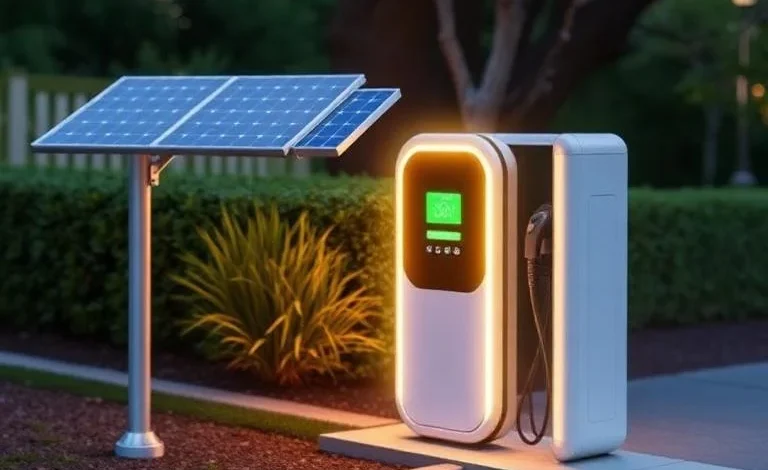
Each station is directly equipped with a highly efficient Photovoltaic Panel combined with lithium-ion banks of batteries to store the energy. There is a smart system that is used to enable energy management and the interaction of customers with Artificial Intelligence. The user app will motivate EV drivers to find nearby stations and track the charging progress.
Intellectual Property Rights or Protection:
The business can relate performance turning based on the weather and usage of EV data. AI-based demand for forecasting and smart controller hardware are the main patent strategies that affect the business direction.
The business embedded the system to manage the energy flow from the panels to the batteries and the key vehicles. The proprietary models predict the regional energy demand for EV-based charging. Powered Smart Charging Stations can protect their business with the name, log, and leads that will be registered trademarks.
These terms prevent other firms from copying the brand and ensure legal exclusivity in the entire marketing. The business can protect its brand reputation from copyright and trade secrets with the software code and trade secrets.
The software code for the mobile applicants and station operators is backed by copyright. So, the business must follow the Intellectual Property rights that help to prevent the business from various fundamental roles and the process of change.
Organizational Type and Its Legal Structure:
The business will be registered as a Private Limited firm under Australian Law. This structure is selected for the following reasons: as offers the protection of limited liability for key shareholders and enables capital through multiple private investors.
The organization supports the growth and key capabilities across the Australian market. The organization has an effective legal structure that allows for a formal governance model and a board of directors.
Solar Powered Smart Charging Stations business has a key founder CEO who is responsible for creating the vision, developing strategic plans, and building stakeholder relationships.
- The business’s CTO- Chief Technology Officer is responsible for implementing IoT integration and an AI system.
- The business’s CFO- Chief Financial Officer is liable to initiate the budgeting, make the financial plan, and build the relationships with the investors.
- The Business Marketing Director is responsible for branding, outreach, and interactions with the customers.
- The business’s HR Manager is responsible for recruitment, performance management, and the employees’ motivation areas over the entire time frame.
Customers:
The main customers of the Solar Powered SMART Charging Stations business are infrastructure the individual EV owners and the coordinate vehicle fleets. These customers are responsible for creating effective and reliable services that increase the business roles and determine the higher strengths.
Business-to-Consumers:
- The impecunious and suburban communities
- Individual EV owners:
Business-to-business:
- The local and regional governments
- Shopping malls and hotel businesses that require on-site charging
The market reports indicate that Electric Vehicle sales in Australia are increasing with the study change and reach 9.6% of the new car sales in the year 2024. Moreover, the charging infrastructure remains underdeveloped and needs to build sustainable changes related to the advanced areas of success.
Competitors:
According to Porter’s Five Forces, the industrial analysis of the business, either a local or an international one, can be determined effectively.
Table 1 Porter’s Five Forces
| Porter’s Five Forces | Implication |
| Competitive Rivalry (High) | Chargefox and Tesla Superchargers are the main competitors of the business that affect the sustainable and off-grid deployment with significant changes. So, the competitors affect the business resources and the entire profitability. |
| Threat of New Entrants (Moderate) | There is a higher Initial Capital Requirement and technical complexity that affect the overall progress of the business terms and the threat of new entrants that impact business profitability. |
| Power of Suppliers (Moderate) | The suppliers’ power depends on the solar panel and the battery manufacturers, but the entire competition in the market and governance incentives can reduce the threats. |
| Power of Buyer (Moderate) | Customers’ overall expectations are high because once the infrastructure is deployed then switching the cost for the users is low and it requires brand loyalty with the service quality. |
| Substitutes’ Threats (Low) | Home charging is an entire substitute but not valuable for renters and commercial fleets. The mobility and conveniences offer a clear benefit that builds higher growth and strengths. |
Skills Analysis:
The SWOT analysis is a model that evaluates the key strengths, weaknesses, opportunities, and the entire threats that impact the business performance and the organization’s direction.
Table 2 SWOT Analysis
| Strengths: The strong business case which is supported by governmental policy and environmental trendsThere is a unified integration of AI and small technologies of solar | Weaknesses: There is a higher upfront investment required to run the operations.The maintenance and logistics in the rural regions could be treated in detail. |
| Opportunities: Rising the EV-based ownershipGovernance incentives for clean energy | Threats: The new regulations affecting the dollar and EV technologiesThe threat of market saturation in the urban zones |
There are various skill gaps like AI programming, battery storage engineering, and solar energy systems, which are optimized to run the detailed and specific interactions that are important. The business hires consultants for the initial tech development. The brand trains in-house engineers through the movement twinning grants and key partnerships with the universities.
Projected Financials:
Table 3 Projected Financials
| Heads | Year 1 (AUD) | Year 2 (AUD) |
| Revenue | 1,000,000 | 2200,000 |
| Fixed costs | 500,000 | 600,000 |
| Variable cost | 300,000 | 700,000 |
| Net profit | 200,000 | 900,000 |
Funding Sources:
Various resources are used to analyze the funding for the “solar-powered business smart charging stations” that affect the performance and raise the overall profitability. Government grants, private investments, debt financing, and crowdfunding are the key terms that affect the business values for the entire success.
The government grants and CEFC, which offer concessional loans for innovative energy-based infrastructure, are used to determine the best and coordinate strengths. The public investment through the various platforms, such as Birchal, appeals to environmentally conscious investors.
Resource Acquisitions:
Various resources that used to investigate the data and generate the specific values to proceed with the change. The tangible assets, intangible assets, and acquisition strategy are important to determine the cleared roles. The tangible assets are the solar panels or barriers, land leases, the truck installation, and the office infrastructure with software reliance.
The intangible assets are brand reputation and customer data, along with the software systems. The acquisition strategy refers to the use of government grants to procure the solar system and negotiate partnerships with public and private firms.
Organization and Management Information System:
Solar-powered smart charging stations business is organized with a centralized structure related to the regional level personal hubs. The firm has decentralized decision-making for the efficiency of local deployments. Business’s MIS- Management Information System depends on CRM, ERP, EMS, and App Analytics. Salesforce for customer data and feedback. The custom dashboard by EMS for energy production and usage is also based on specific instructions.
The cybersecurity plan relies on end-to-end encryption, two-factor authentication for mobile payments, and compliance with Australia’s Privacy Act of 1988. The business must develop its cybersecurity plan that helps to protect the brand value its image, and the overall stability related to the entire fields that address the transomed changes.
The national coverage and the carbon neutrality with the international expansion explore the deployment in Newland and Southeast Asia with the sunny markets.
Vision for the Future:
The vision for this business is to lead Australia’s transition to a sustainable transport future by offering clear and accessible smart or solar-powered EV charging roles. The long-term goals are based on national coverage, carbon neutrality, and policy collaboration that explores the deployments in sunny markets. The main purpose of this business is to offer valuable solar systems and charging stations to customers. The customers are both B2B as well as B2C that rely on the specific solar markets.
The goal of this project is to generate higher revenue by satisfying the customers, both individual and corporate level customers, which enhances the overall progress and the specific fields regarding the advanced resources.
Conclusion: The Solar Powered Smart Charging Business Plan
This business plan investigates the bold and necessary steps related to the greener level in Australia. The solar-powered Electric Vehicle charging situations provide smart and venture activities to meet the key needs in sustainable and clean energy practices.
The financial model of ecological innovations and the support of the government have the key potential for revolutionizing EV charging and becoming the model for global clean mobility-based solutions.