

Leading Through Digital Disruption of Walmart

Digital disruption has been rapid and unprecedented transformation of the retail industry. Retail is being redefined at every level from the consumer side shifts in behaviour, the rise of e-commerce, automation and data centric decision making. Against growing competition in the global arena retailers have to be agile, innovative, and have strategic foresight to respond.
Walmart Inc. is the world’s largest retailer with more than 10,500 stores in 19 countries and 230 million customers every week. Scale has been important for Walmart, yet the company is under pressure from digitally native competitors such as Amazon, demanding customers and the complexities of supply chains. Given this volatile environment, to develop and sustain the competitive advantage in the digital world, digital transformation across the systems, culture, and leadership is required.
In order to review how Walmart Inc can improve its digital readiness, this report was commissioned by the Chief Information Officer (CIO).
It discusses different opportunities and challenges (Task 1), identifies possible emerging technology that fit in with agility (Task 2), suggests cultural transformation strategies (Task 3), and gives views upon digital success leadership (Task 4).
Read more: Leading through the digital disruption of Tata Motors
Task 1 – Opportunities & Challenges in Digital Disruption
As the world’s largest retailer, Walmart is constantly under pressure to evolve in a digital disruption environment. Change in consumer behaviour, technological innovation and increased competition has brought the digital transformation as not a choice but a requirement.
In this section, two challenges that crucially need to be solved are evaluated critically, strategic opportunities and transformation objectives are outlined regarding the Operations, ICT, and Marketing, respectively.
Challenges:
Competitive Pressure from Digitally Native Players:
Walmart Inc is one of the most urgent challenges of competition against the e-commerce giants, especially Amazon. As of 2024, Amazon had 37.6% of U.S. e-commerce sales compared to Walmart’s 6.4%. Amazon’s infrastructure to deliver highly personalised experiences, fast fulfillment through the Prime platform and integrated cloud is a huge advantage
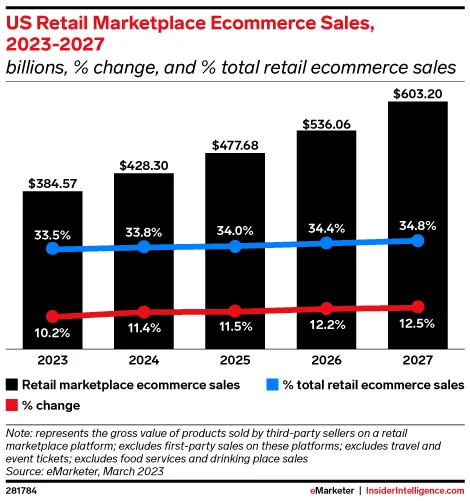
Walmart has responded with services such as Walmart+, Store Assist, and GoLocal but all of them need to be deeper integrated into the digital. AI enabled logistics, predictive delivery and advanced personalization can shore up this gap, and they provide a new opportunity.
Inconsistent Personalization and Omnichannel Experience:
Today’s customers expect a seamless, hyper-personalized experience across every point of contact – online, mobile and in-store. While Walmart has made advancement in mobile app, curb side pickup and Scan & Go, Walmart Inc has not completed the final leg of its journey in delivering really real time, data driven personalization.
Proskurnina et al. (2021) state that omnichannel integration is a major success factor for digital transformation in retail. And without one, Walmart’s marketing is reactive, not proactive. Immersed systems provide a blurred view of your customers and leave you with limited insight to your engagement or campaign ROI.
Opportunities for Transformation:
However, Walmart Inc is well positioned to use its massive customer base and data rich environment. Walmart Connect and Walmart Luminate are strong platforms for digital innovation across departments and are investments that the company is making.
- Operations: Walmart should expand the use of its AI supply chain forecasting operations to be more responsive and reduce waste. Alphabot and other technologies are streamlining order fulfillment already. Such solutions would scale well across distribution centres to improve agility in the face of ongoing supply chain disruptions.
- ICT: Migrating fully to cloud native infrastructure is a major opportunity to improve data interoperability and system scalability through ICT. This is a strategic step in this direction, as Walmart’s five-year partnership with Microsoft Azure allows them to roll out advanced analytics, real time dashboards, and global IT standardization.
- Marketing: Walmart Connect must become a real time behavioural marketing engine and Walmart must continue to evolve it. Using AI to segment customers and dynamically target them would enable marketing teams to serve context aware offers, personalised experiences and improved campaign performance.
Digital Transformation Objectives:
For Walmart to maintain its competitive edge, it must align its transformation strategy with three core objectives:
- Support operational agility and reduce cost inefficiencies with enablement of AI powered supply chain and inventory systems.
- Migrate to the cloud and unify data platforms to support real time, cross functional decision making and support ICT systems.
- AI driven marketing automation and omnichannel data synchronization to enhance customer personalization.
Task 2 – Digital Business Agility & Technologies
Now, the ability to respond to change rapidly and intelligently is a core competitive capability in the retail sector as it experiences accelerating disruption. To be able to digitize operations, Walmart must also use emerging technologies to build digital agility across the enterprise.
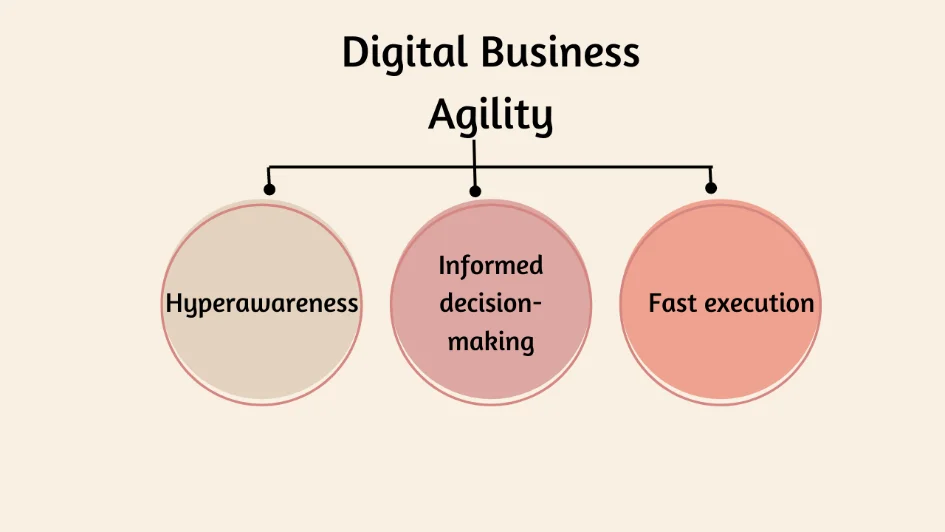
The Digital Business Agility (DBA) model consisting of hyperawareness, informed decision making and fast execution is a robust model to assess and implement such transformation. In this context, two emerging technologies, Artificial Intelligence (AI) and the Internet of Things (IoT) have the potential to help Walmart become more agile in its business.
Technology 1: Artificial Intelligence (AI)
Walmart’s complex ecosystem is enabled by AI to become hyperaware and make informed decisions. Walmart has over 230 million customers weekly and a lot of data generated on physical and digital channels, which means AI allows Walmart to sense shifts in customer behaviour, purchasing patterns, and market dynamics continuously.
The company has used AI to support functions like fraud detection, dynamic pricing, and customer service automation through Walmart Labs and Sam’s Club.
Machine learning algorithms are hyperaware in the sense that they enable Walmart to detect emerging consumer demand trends in real time across a region. For instance, AI-based demand forecasting tools help the company to react to purchasing patterns and seasonal changes.
Walmart’s predictive analytics initiatives, according to Murphy, are increasing stock availability while reducing waste, which indicates improved informed decision making from real-time high-volume data streams.
Additionally, AI is speeding up the execution via operational task automation. Inventory management systems make use of AI chatbots for short wait times in customer support and employ intelligent systems for optimal stock levels to ensure a smooth process.
However, Walmart is still behind governance of AI systems; for example, data bias addresses, mitigating algorithmic opacity, and ethical implications are crucial in building trust, and fairness while making decisions.
Technology 2: Internet of Things (IoT)
By integrating IoT infrastructure into Walmart’s retail and supply chain operations, real time responsiveness is possible for all three elements of the DBA model. Walmart’s Intelligent Retail Lab (IRL) at the hyperawareness level uses camera equipped shelves and in store sensors to detect inventory levels and foot traffic patterns.
The real time data feeds enable the company to keep shelf availability and optimize in store layouts according to customer behaviour.
IoT also helps in performing informed decision making by transmitting granular operational data to central dashboard.
It makes it possible for managers to decide staffing, product location, logistics in almost real time based on evidence. Take, temperature and humidity sensors added in perishable goods supply chains give actionable information to prevent spoilage, decrease waste and ensure compliance.
In regard to fast execution, IoT automates the previously manual processes like shelf scanning, inventory alerts, and environmental monitoring, thus increasing the operational speed and accuracy.
According to Deloitte (2024), more than 40 % of U.S. retailers experience procurement disruption in the face of ongoing global supply chain instability. But IoT can turn this around by offering end to end visibility and quick responses to supply interruptions.
Nevertheless, these benefits come with some challenges. Notably, Walmart has to navigate increasing scrutiny of data privacy and surveillance across the regions with the same laws, that is, regions governed by GDPR and CCPA. Especially to avoid reputational and regulatory risks, sensors are to be used transparently, with secure data handling, and overtly being deployed with a set of ethical standards.
Task 3 – Building a Digital-Ready Culture
Digital Ready Culture is an organisation where employees are empowered, processes are streamlined and digital tools are fully embedded in everyday processes. Such a culture supports agility, innovation, customer focus and cross functional collaboration, which is critical to companies’ ability to survive in the midst of continuous disruption.
As a global retail leader, Walmart has made good progress in making it digitally ready, but still has some major cultural gaps to close to enable holistic transformation.
Walmart can be analysed against the Four Pillars of Digital Culture, customer-centricity, agility, innovation, and collaboration.
Customer-Centricity:
In customer-centricity, the processes, services, and systems are created or designed around customer needs and the expectations. An example of a company using customer data analytics to create personalised online recommendations and promotions is Walmart’s use of Walmart Connect for this purpose.
As well, these include the integration of mobile shopping, curb side pickup, and digital payment systems, which denote that the company is keen on convenience and relevance. Digital tools improve the touchpoints, but Walmart will have to ensure consistent omnichannel experience by making the physical and the digital to feed into each other better.
Agility:
Walmart has invested into its tech hub, Walmart Global Tech, and Walmart Labs which contains agile teams that rapidly iterate on product development. These teams employ DevOps methodologies and user-centric design to prototype solutions in areas such as online grocery fulfilment and app development.
But agility is not yet present uniformly across Walmart’s operations. Sustaining agility according to Denison et al. (2006) is based on cultures that reinforce decentralised decision making and responsive leadership. Some markets will still inhibit grassroots innovation and fast response due to Walmart’s traditional hierarchies.
Innovation:
Walmart’s Open Call program encourages innovation through allowing entrepreneurs to pitch products, and through its strategic partnerships with startups and tech giants like Microsoft. Likewise, Walmart is using AI and automation through Alphabot and intelligent shelving. However, it takes a mental change at all levels to sustain innovation.
According to Kotter’s (1996) Change Model, innovative projects can get stuck without visible leadership commitment and continual reinforcement. To complement Walmart’s top-down innovation strategy, bottom-up experimentation and risk tolerant work environments are required.
Collaboration:
Cloud based tools such as Microsoft 365 are increasingly helping cross functional collaboration by providing shared data access, virtual meetings and joint problem solving across geographies. Walmart’s investment in remote collaboration infrastructure has accelerated during the pandemic.
Despite this, silos remain in legacy departments, especially in its international operations. In order to become a digitally fluent organisation, Walmart needs to flatten hierarchies, give teams autonomy, and embed collaboration into performance metrics.
Key Cultural Actions for Walmart:
To build a stronger digital culture, Walmart should expand Walmart Academies to include data literacy, design thinking and agile skills. It is important for leaders to model digital behaviours, using and promoting digital tools.
Hierarchies will be flattened and decisions will be decentralized to give frontline teams real time data and autonomy. Cultural transformation has started but is not consistent, and Walmart must see culture as an ongoing process that is driven by change champions and measured by behaviours.
Task 4 – Digital Leadership Approaches
With its deep digital transformation journey, Walmart must go beyond command-and-control structures to agility, trust and people centric collaboration to lead. It’s not enough to be technologically advanced, leaders have to empower teams to adapt, innovate and act with integrity.
There are two styles that are particularly relevant to Walmart’s future: Hyper aware Agile Leadership and Ethical Tech Leadership. Both support transformation through responsiveness, team engagement, and responsible innovation.
Hyperaware Agile Leadership:
With agile leadership, the ability to learn rapidly is possible and execution is decentralised. However, in the digital age, it must also have hyperawareness, the ability to constantly scan, sense and respond to change across the market, technology, and workforce.
Early adoption of agile thinking is shown in Walmart Global Tech and Walmart GoLocal initiatives on digital product development and logistics, as in the case of Walmart’s success. What this has allowed for is cross functional teams to iterate quickly and deliver value at speed.
McKinsey states that organisations with agile leaders are 70% more likely to outperform financially. Walmart needs to flatten hierarchies and to move decision making closer to frontline teams to embed this more widely.
Real time responsiveness is facilitated by hyperaware agile leaders, who use data from Walmart Luminate intelligence platforms to make business decisions. They also create psychologically safe environments in which people can experiment and receive continuous feedback loops, which are central to innovation.
This is in line with Goleman’s coaching and democratic leadership styles that emphasize developing talent, encouraging participation, and aligning team efforts with long term strategic goals. The people-oriented traits are critical to building collaborative cultures in large distributed operations like Walmart’s.
Ethical Tech Leadership:
The need for Ethical-Tech Leadership arises as Walmart integrates AI and IoT, and advanced analytics into its business and the company’s innovation needs to be aligned with human values and regulatory expectations. Walmart’s smart sensors, facial recognition, and data platforms like Walmart Luminate have brought up important questions of surveillance, algorithmic bias, and transparency.
Ethical tech leaders promote transparency, fairness and stakeholder trust. They are not just following policy—they weave ethics into design and implementation. This leadership style would support the customer trust and internal alignment at Walmart by promoting the inclusive innovation and ethical decision-making frameworks.
Also, ethical-tech’s leaders support teams’ collaboration by anchoring them to a common set of values and mission. Here Goleman’s visionary leadership style to inspire teams through a unifying mission is critical, and for helping Walmart navigate change not only effectively but responsibly.
Conclusion
The key to Walmart remaining a global retail leader will be its ability to be intelligent and ethical in adapting to an era of rapid digital disruption. This report critically examines the organisation’s external and internal challenges, and the key digital transformation objectives to improve the organisation’s operations, marketing and ICT functions.
In addition, it has suggested integrating AI and IoT technologies to improve digital business agility, along with the requirement for a cohesive, innovation driven and customer centric culture. In addition, the use of agile and ethical leadership approaches has been identified as important in order to enable collaboration, trust and networked decision making across Walmart’s sprawling global operations.
Walmart’s long term digital success will not be secured by technology alone. AI and IoT, and automation are the basis, but people, culture, and ethics of leadership determine how effective. For Walmart, the human centric transformation has to be the focus, building digital skills, encouraging innovation, and promoting cross functional collaboration.
Lack of ethical governance is equally important to avoid data misuse, algorithmic bias and inequality. Essential are flattened hierarchies, agile decision making, culture of experimentation and customer focus. These values embedded will place Walmart not only to adapt, but to lead the way to the digital future of retail: ethical, responsible, customer first.