

AI in Central Banking – Synthetics VS Real World Data in Forecasting Models – Literature Review & Conceptual Framework

AI in central banking is transforming the way central banks operate, enabling them to enhance forecasting and manage the key risks with the regulatory oversight to determine the business roles. Artificial Intelligence central banking has progressed through major phases like rule-based system, ML- Machine Learning, and AI(GenAI) emergence of generative AI.
Central banking’s transformation reflects the broader trends in the AI field, but its key applications carry the unique challenges and valuable opportunities due to the critical role that institutions play in ensuring the financial and economic stability. ISO/IEC 23053: 2022, IMF AI preparedness Index, and research by the Bank for International Settlements offer guidance for the responsible leveraging of Artificial Intelligence.
Read more: How to manage liquidity and finances in commercial banks?
Rule-Based System to Machine Learning to Generative AI:
Rule-Based System:
The 1st wave of Artificial Intelligence in Central Banking in the early stages depended on central banks, which employed the expert system or rule-based system. Generative AI by rule-based systems was transparent and determined, but also appeared as rigid. A rule-based system could only process the scenarios foreseen by human designers and struggled with the uncertainty and changes in key trends. The rise of Data-Driven Intelligence as data collection capabilities rise.
Machine Learning:
Machine learning models learn from the data rather than the hard-coded instructions. Machine learning helps the rule-based system of banking to identify patterns, relationships across large datasets, and suitable for tasks like Macroeconomic forecasting, credit risk analysis, and market sentiment analysis from news and social media.
Instance, the Bank of England and European Central Bank used Machine Learning for forecasting inflation and managing unemployment rates. Moreover, Machine Learning models can be opaque, as they refer to “black boxes” that require careful validations to manage the biases.
Generative AI:
Generative AI is the most recent development, especially the large language models such as ChatGPT and Google’s Gemini. All of these models go beyond key predictions, and they can generate human-like text with the summary of documents and stimulate policy debates. Generative AI has begun to find use in drafting internal policy begins and analyzing the large text-based datasets.
Review of Major Frameworks:
ISO/IEC 23053: 2022 – AI System Lifecycle:
ISO/IEC 23053:2022 is an international standard that is published by ISO- International Organization for Standardization and IEC- International Electrotechnical Commission, which provides the frameworks for managing AI systems across the entire lifecycle. Planning and requirements design and development, training and validation, and monitoring with deployment. The goal is to examine the AI system as explainable and secure. The central bank’s framework is especially important because AI systems influence the decisions and affect the broader economy, with the financial system.
IMF AI Preparedness Index:
IMF- International Monetary Fund created the AI preparedness Index to evaluate how the country is preparing to integrate Artificial Intelligence technologies across public institutions like central banks. Digital Infrastructure, like the availability of the internet and cloud infrastructure, helps to preparedness across the areas. Human capital, data governance, institutional frameworks, and digital infrastructure are key areas for the IMF model.
BIS LLM Application:
BIS- Bank for International Settlements is a hub for central bank coordinators that publish research studies on using the Large Language Models. BIS demonstrated the summaries of speeches by central banks and analyzed the trends in the financial stability reports. Biases in training data could influence the output of models, and a lack of explainability that undermines the trust in overly relying on AI could reduce human accountability.
Real-World Data in Forecasting as a Role in AI-Driven Central Banking:
Central banks are leveraging the new techniques to improve their ability to forecast economic conditions and detect financial risks. One of the critical components of any Artificial Intelligence, as well as Machine Learning forecasting models, is the data used. AI applications in central banking help to offer an in-depth look at how real-world data is used in forecasting and maintain the central banking or economic modeling through advanced operations.
Applications of Real-World Data in Forecasting of Central Banking:
The following are some applications of real-world data in the entire forecasting of central banking.
An Inflation Monitoring and Forecasting:
Central banks rely heavily on the real consumer price index data and produce the price index with wage data to create inflation forecasting. Machine learning models can process various datasets, including commodity prices and retail data, to evaluate the short-term as well as medium-term inflationary trends. ECB- European Central Bank uses real-time pricing data from the online retailers that direct the early signs of inflationary pressures. BOE – Bank of England integrates the consumer spending data and energy prices to evaluate the near-term inflation as accurately.
Risk Assessment and Financial Stability:
Real-world data from banks and key financial markets is important for identifying systemic risk. Central banks use the regulatory filings, load performance data, and interbank transaction records to control the financial sector vulnerabilities. The Federal Reserve uses the real data from the CCAR- Comprehensive Capital Analysis and Review to evaluate how banks can respond under the various scenarios of adverse conditions. AI models can train the real-world defaults and liquidity indicators as early warning signals of financial distress.
Real-Time Macroeconomic Forecasting:
Multiple machine learning models that used to build the forecasting for Gross Domestic Product, Consumer Spending, and Unemployment. Central banks feed in the real-time economic indicators to predict the current state of the economy as accurately as the traditional models. New York Fed’s Nowcasting Report uses a variety of real economic indicators to offer weekly updates on the United States’ GDP. Bank of Canada uses real trade and commodity prices to enhance GDP growth projections, especially the important in resource-based economies.
Strengths:
- Real-world data is directly grounded in the actual outcomes of historical events. Artificial Intelligence Models trained on such data as more likely to reflect the realistic economic behavior, which is critical for the credibility of forecasts used in monetary policies.
- Real datasets provide the long-term services of data, allowing Artificial Intelligence models to learn from multiple economic cycles, like periods of boom and bust, inflationary shocks, and external disruptions.
- Real-world data is also generated by trusted sources like national statistics offices. Models that use the data are easier to interpret and need to be accepted in policymaking circles.
Limitations:
- There is a delay that occurs in the publishing of economic data, such as quarterly gross domestic products are released after the quarter ends. Lacking situations create a gap between real economic activities and the available data.
- Financial crises, key pandemics, and serving of geopolitical shocks are rare but highly impactful. Limited coverage of some rate events creates unexpected economic shocks.
- Privacy regulations such as the GDPR- General Data Protection Regulation restrict the data, especially in the training of AI models. Privacy and condimental concerns limited the access to higher quality granular data.
Synthesis Data in AI Modeling:
Central banks are integrating the AI- Artificial Intelligence into economic forecasting and financial regulations with synthetic data that emerged as a powerful tool to overcome the limitations of real-world data. Synthetic data refers to the artificially generated sets of data that are used to stimulate the statistical properties and manage hypothetical scenarios.
Defection and Generation Techniques:
Central banks see various techniques by the LLM and AI models that help to adjust the replacement structure, distribute the present, and make the suitable for training machine learning.
GAN- Generative Adversarial Networks:
Generative Adversarial Networks are one of the widely used tools for synthetic data generation. GAN consists of two neural networks, like generator and a discriminator that compete with each other. Fake data was created by generations to look like real data, while the discriminator tries to evaluate whether the data is synthetic or real. Central banking can be used to evaluate the plausible or financial time series such as asset prices, interest rates, and credit risk indicators.
Transformer Models:
Transformers, especially the LLM- Large Language Models, can be used to generate synthetic text-based data like economic narratives and policy statements with sentiments in changes. Central banks can generate the text-based data and give higher importance to this data, as familiar with the long lifecycle. All of these methods rely on the predefined economic rules and behavioral assumptions to stimulate the response to entire shocks.
Application in Supervising of Central Banking:
Synthetic datasets allow the central banks to stimulate extreme but less economic conditions with financial restrictions.
Supervisory Stress Testing:
Synthetic datasets allow the central banks to stimulate the extreme but less plausible financial events as not occurred in the current story, Regulators and supervisory models’ asses the resilience of banks with financial institutions under the novel stress scenarios. The synthetic data can be act in valuable in the supervised models and assess the banks’ resilience with the financial institutions.
Stimulation of the Financial System:
Central banks can directly use the synthetic forms of data for synthetic behaviors, interbank liquidity flows, and contagion events. Central banks’ stimulations help to test the key effectiveness of the macroprudential tools like countercyclical capital buffers and emergency liquidity facilities in maintaining financial stability.
Fraud Penetration and Anomaly Detection:
Artificial Intelligence models can be trained on real data as they struggle with the identification of rare anomalies like Financial Fraud, market manipulations, and operational failures. Synthetic data can be used to generate examples of suspicious behavior, help to raise the sensitivity of the anomaly detection system, and expose confidential or proprietary information.
Advantages of Using the Synectic Data:
Multiple advantages are gained by businesses through the use of AI modeling, which offers several competing options. Bank perseveres and the faculty of the data are remaining benefits that are used to determine the detailed and sustainable actions for the entire changes.
- Synectic data eliminates the need to use personal as well as confidential information, which makes it easier to comply with the privacy regulations like GDPR- General Data Protection Regulations.
- Central banks can generate the data for unprecedented and future-looking scenarios like macroeconomic effects of climate change, new financial technologies, and the geopolitical shocks that challenge historical records.
- Synthetic data can be generated quickly and reducing the overall time and cost involved in the process of data collection for central banking.
Challenges and Concerns:
- Artificial Intelligence models are trained predominantly on the form of synthetic data, which learn patterns that are not fully representative of real-world dynamics. Thinks situation led to overfitting the models, which perform well in environments but fail to analyze actual data.
- Synthetic datasets that are poorly constructed may introduce unrealism or destroyed relationships as leading to anomaly detection systems with a lack of accuracy in forecasting risks.
- Synectic data may appear as replicate biases that represent the original datasets and are made during the entire process of the generator. Poor decision-making also impacts policymakers and analysis at central banking.
Forecasting in Central Banking:
The concept of forecasting plays a vital role in the entire central banking. Forecasting allows central banks to anticipate future economic conditions and make some informed decisions related to key policy tools such as the rates of interest, the target of inflation, and financial stability measures. Traditionally, central banks relied on the economic theory-based statistical models. Machine Learning and Artificial Intelligence also explore advanced data-driven forecasting techniques.
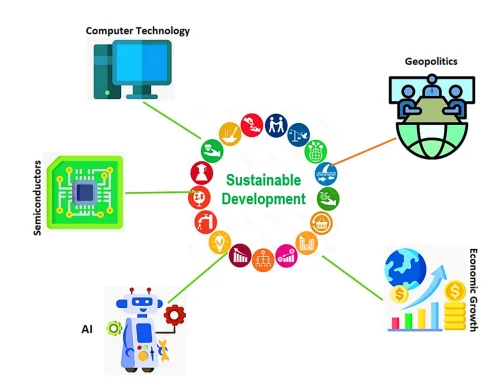
All of these new models can manage the larger datasets, manage the complex patterns, and raise the accuracy of predictions that were not possible in the past. Forecasting technique helps the central bank assess the risks and respond the quality to economic changes with the public and market communications.
Review of Economic and AI-based Forecasting Models:
Central banks have historically used economic models that are based on well-established economic theories and rely on historical data to explore the relationships among the key variables. ARIMA – Auto Regressive Integrated Moving Average is a model for analyzing time series, like inflation and GDP, which interact among several economic variables at once.
All of these modes are based on the key transparency and of as make them valuable for the explanation of forecasts to the key policymakers. Moreover, central banks can capture the non-linear relationships and adjust quickly to manage some sudden shocks.
Central banks are incorporating AI-based forecasting techniques to manage the limitations. AI-based models, particularly based on machine learning, process the vast amount of data, and detect complex patterns with hidden patterns by relying the rigid assumptions. LSTM- Long Short-term Memory network is a model that is used by many central banks as a type of neural network that is designed for the forecasting of time series. GBM- Gradient Boosting Machines and SVM- Support Vector Machines are also key models that predict the economic entry as a recession.
Use of Forecasting in Interest Rate, Financial Crossland Inflation:
Forecasting is important to provide full guidance about interest policy, as one of the most powerful tools of the central bank. AI-based models can evaluate a broader range of indicators, like higher frequency of financial data and commodity prices, with the only shopping behavior. ECB- European Central Bank and Bank of England use nowcasting modes powered by ML- Machine Learning to build short-term forecasting of Gross Domestic Product and Inflation.
Conceptual Framework – AI in Central Banking:
Real Data and Synthetic Data in Models of AI Forecasting:
Artificial Intelligence in forecasting refers to the quality and type of data that is used to become more complex, as central bank integrations. Conceptual framework presents the comparison of AI modes trained on the real-world data as well as synthetic data that focusing on key dimensions. AI-based models incorporate the guidance with the NBIS- Bank for International Settlements and the IMF AI preparedness Index 2024. Global frameworks help central banks assess the technological readiness and robustness of the expected AI system.
Accuracy:
Real-World Data, Artificial Intelligence models generally offer higher accuracy when applied to common and well-documented economic situations. Data comes from actual historical events like inflation rates, unemployment trends, and interest rate changes that help models to learn from proven economic patterns.
Synthetic data AI models allow the central banks to simulate unusual or future events not present in historical records. Synthetic datasets can be generated to reflect the CBDC- Central Bank Digital Currency as major climate-related shocks to finances. Training an AI system on a broader range of possible scenarios helps to build accuracy, real-world performance, and enhancement of predictive strength in extreme or novel cases.
Privacy:
Synectic data’s main advantage refers to the privacy of preservation. Real-world financial and economic data at the firm can contain sensitive information. AI models can raise serious concerns around the protection of data, regulatory compliance, and the use of ethical data. Synthetic data by design avoids the risks and replicates the structure of trends about real datasets, but does not include actual personal data with confidential information. AI modes can accurately determine the best activities to maintain the cleared values, upgrade the specific interactions, and generate proper activities.
Cost of Data Collection:
The collection and maintenance go real-world economic data appear to be resource-intensive. National statistics agencies and care surveillances helps to contribute to the cost of producing and verifying higher-quality data, as gaps with time lags hinder the forecasting models. Moreover, it is important to examine that the synthetic data creation requires significant initial investments in the model design, validation, and collaboration to ensure the realism and core relevance.
Explainability:
Real-world data has an effective strength in aligning well with the traditional economic models and theirs. AI models trained on real data as often more easily explained to policymakers with detailed activities. Synthetic data is generated using Black-Box techniques such as deep learning as well as agent-based modeling. BIS Forecasting Function Model emphasizes the need for a higher level of transparency, interpretability, and overall consistent actions through clear documentation and governance-based practices.
Forecasting Efficiency:
Forecasting effectiveness and effeminates indicate how accurately the model can adapt to new information. Artificial Intelligence and LLM models use real-world data to excel in short-term predictions for central banking transformation. Central banks use synthetic data that improves forecasting by allowing them to run simulations. Dual-pipeline architecture uses real data for the model grounding and enhances the speeds as well as resilience.
Anchoring the Frameworks and Ensuring Data Types:
BIS- Bank for International Settlements has directly highlighted the importance of combining real as well as synthetic data in the Forecasting Function Model, which urges the central banks to raise the accuracy of prediction, resilience to shocks, and interpretability in AI systems. BIS recommends the design of a forecasting system that supports the policy stress testing and risk surveillance using a wider variety of data sources.
IMF AI Preparedness Index offers a clear roadmap and direction for examining Central Bank readiness through several different pillars. Data governance, key infrastructure, model transparency, and human capital are core types that generate better actions. Central banks scoring high on the entire index tend to have secure data pipelines and train the AI tools ethically or securely.
Artificial Intelligence’s future in central banking lies in selecting the real as well as synthetic data, and it is also suitable for intelligence that combines the tools. Central banking uses real-world data for reliable operations, regulatory compliance, and ensuring historical validity. The employment of syntenic data stimulates the extreme roles, and builds higher-risk scenarios helps to create the proper activities.
Central banking uses Artificial Intelligence to transform the way of operations. The central bank can improve economic forecasting by using machine learning can analyze entire extensive amount of data from diverse sources like market indicators, timely economic activities, and predict the changes.
AI models like Long Short-Term Memory networks can detect complex patterns to make better decisions and ensure statics models. AI enables the central banks to create an early warning system that detects the signs of financial crises that tend to lead to key crises. Machine learning tools can control the vast streams of financial transactions, credit flows, and build market prices to ensure of banking system.
Artificial Intelligence supports data-driven policymaking by helping central banks to analyze the complex relationships among the key economic variables. Central banks design better monetary as well as fiscal policies that are backed the data and predictive insights. Artificial Intelligence is also raising the operational efficiency with central banks and tools like NLP- Natural Language Processing with RPA- Robotic Process Automation are effective ones to maintain the business values and economic perspectives.